Editor’s Note: This article is the first in a planned series focusing on tariff policy and AV industry ramifications. If you’d like to add your voice to the story, please email [email protected].
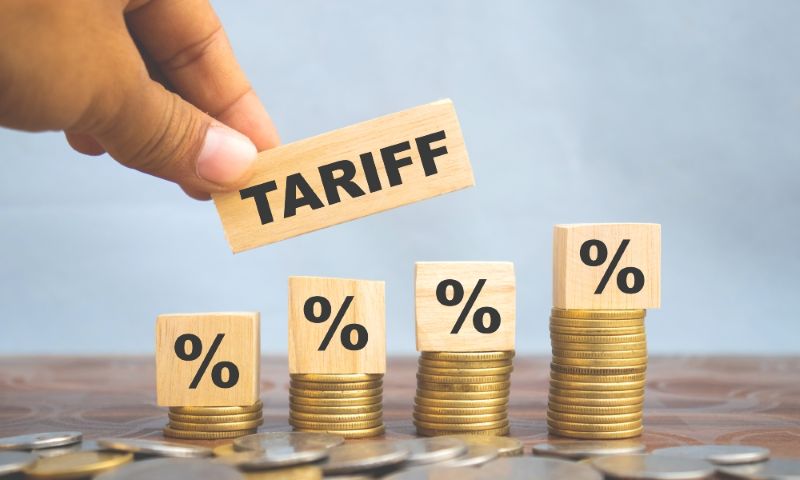
Last Friday’s U.S. Supreme Court ruling that struck down President Donald Trump’s “Liberation Day” tariffs ultimately has done little to quell the pro AV and custom home integration industries’ lingering uncertainty.
According to Avi Rosenthal, managing partner of BlueConnect Partners, although the Supreme Court ruling initially seemed like a reprieve for integrators and vendors alike, the subsequent reintroduction of different tariffs has deepened a sense of business chaos. This has left industry stakeholders struggling to plan for a future in which costs and supply chains remain unpredictable.
Does Supreme Court Ruling Dissolve AV Industry Tariff Liabilities?
The Supreme Court decision invalidated the “Liberation Day” tariffs that President Trump implemented under the International Emergency Economic Powers Act (IEEPA). This immediately dissolved significant tariff liabilities for businesses. As Rosenthal explains it, “In the case of China, for instance, it reduced anywhere from 20% to 25%. In the case of Europe, it was about 15%. Most countries had between 10% and 20% tariffs on them.”
Any relief was fleeting, however. The administration quickly pivoted, instituting new global tariffs — with some exemptions and carveouts in line with the United States-Mexico-Canada Agreement (USMCA) — under a different legal authority. “As of midnight on Tuesday, the [new] 10% tariffs were all instituted,” Rosenthal notes.
This rapid shift has thrown the integration industry back into a state of deep uncertainty, reminiscent of the unpredictable trade environment last spring. “One thing that has not changed since we spoke last April is the word ‘chaos,’” Rosenthal laments. “Unfortunately, things are just as chaotic as they were back then.”
Is There a New Tariff Landscape for the AV Industry?
With the IEEPA tariffs struck down, the AV industry now faces a complex web of duties that we will refer to here by their respective section numbers.
The newly enacted “122 tariffs” refer to Section 122 of the Trade Act of 1974, which empowers the president to act during a currency devaluation or balance-of-payments deficit. Rosenthal points out that the legal standing for these tariffs is questionable. “Since neither of those are apparent to the average observer, there is a question as to whether or not there will be lawsuits levied against the 122s now,” he says.
These tariffs are currently set at 10% and have a statutory 150-day limit, set to expire in late July unless Congress acts. Further congressional authorization is an outcome Rosenthal views as unlikely in a midterm election year.
Meanwhile, other tariffs remain in place, unaffected by the Supreme Court’s ruling. The “301 tariffs,” or Section 301 tariffs, were implemented during the first Trump administration and primarily target electronics from China. These continued through the Biden administration and have been in place for years. Additionally, “232 tariffs,” or Section 232 tariffs, apply to commodities like steel and aluminum.
This multi-layered tariff structure creates a difficult environment for manufacturers/distributors and their integrator partners, all of which rely on global supply chains for components and finished products.
Manufacturers and Integrators are Bracing for Impact
According to Rosenthal, the constant state of flux is taking a toll on both manufacturers and integrators in pro AV and custom home communities. The primary challenge is the inability to forecast costs accurately. This makes it nearly impossible to price products stably or quote projects confidently. “Nobody knows. [That] is the biggest problem,” Rosenthal states. “It’s very hard to run a business when you don’t know what your costs are going to be next.”
Immediately following the “Liberation Day” announcement on April 2, 2025, many manufacturers initially absorbed tariff costs to maintain price stability for their integration partners. Rosenthal notes that, to their credit, these suppliers held the line, sacrificing profit margins to limit integrators’ exposure and keep projects moving. This time, that buffer may be gone. “Unfortunately, a year later, that’s no longer the case,” he laments. “And so, the integrators now are sort of bracing for price increases.” Rosenthal continues, “There’s no more room for the manufacturers to be able to not raise prices and not move things along.”
To be clear, Rosenthal has not heard of any specific price increases since the 122 tariffs were announced less than a week ago. However, the expectation among stakeholders is clear. “Everybody is fearful that there will be price increases,” he states. This fear can create a paralysis of sorts, as businesses hesitate to make decisions without clear information. “The situation is so fluid right now that it’s very hard for companies to either judge or plan or predict what’s going to happen next,” Rosenthal adds.
Tariff Policy and the AV Industry: Uncertain Future, No Easy Answers
The Supreme Court’s silence on the issue of refunds for the now-illegal IEEPA tariffs adds yet another layer of complexity. Although the government collected billions under these tariffs, the feasibility of, and process for, any refunds is unclear. Rosenthal cautions against expecting a quick or simple resolution. “The average American should not be expecting a check. That’s not a thing,” he says, questioning how funds could ever be equitably returned to the consumers who ultimately paid the price.
And now, some manufacturers will likely soon add a surcharge to cover the new tariffs. If they do, will prices snap back to where they previously had been when these new tariffs expire in 150 days? History suggests otherwise.
“[Think about] fuel surcharges,” Rosenthal suggests. “DHL and FedEx got very used to collecting those fuel surcharges, and they didn’t want to give up that revenue.”
Prepare for the Worst, Hope for the Best
For integrators and manufacturers trying to navigate this environment, Rosenthal’s advice is to prepare for the worst even as they hope for the best. The initial excitement following the Supreme Court’s decision quickly soured when administration leadership tapped into different tariff mechanisms. Thus, Rosenthal’s recommendation for industry stakeholders is to operate as if the current instability is the new normal.
“This chaos is not going away anytime soon,” Rosenthal concludes.