For integrators, it’s a familiar scenario: Clients rush into a meeting with minutes to spare, only to encounter missing cables, unclear connection paths or last-minute calls to IT — leaving them exasperated and demanding more reliable, streamlined systems and room designs.
The constant struggle with cables, adapters and proprietary systems in today’s hybrid workspaces, classrooms and conference rooms has turned simple meetings into frustrating exercises in setup and troubleshooting. Users expect the same seamless “plug-in and go” experience they enjoy at their desks or at home, yet many shared spaces remain hampered by outdated AV designs that require special instructions or a rescue from IT.
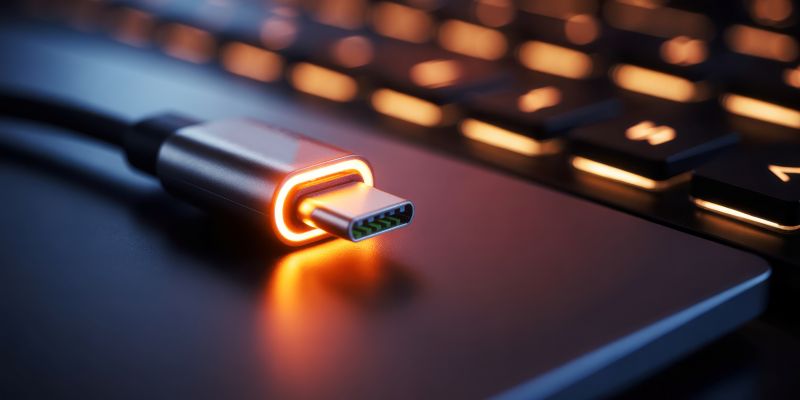
The game-changing adoption of a proven connection system is now making waves in the pro AV industry. Enter USB-C — a single, reversible port capable of delivering power, high-speed data, video, Ethernet and device charging simultaneously. With USB-C, conference rooms, lecture halls and other meeting spaces can finally mirror the effortless connectivity of personal workstations.
USB-C Connectivity as the All-in-One Solution
A single USB-C connector now manages power delivery, video transmission, network backhaul, USB-peripheral connectivity and device charging through a single cable. This consolidation simplifies installation, improves system reliability across locations and room types and is reshaping the entire connectivity landscape.

Regulatory moves — such as the European Union’s common-charger mandate and adoption of USB-C on mobile devices — have cemented the standard’s future. As a result, integrators are increasingly replacing legacy HDMI and USB-A setups with USB-C to eliminate cable clutter and deliver a “walk in and connect” experience.
According to the USB Implementers Forum, more than five billion USB-C-enabled devices will ship globally in 2026, making it the fastest-growing connectivity standard in history.
Empowering Bring Your Own Meeting (BYOM)
Bring your own meeting (BYOM) — where participants run a meeting from their own laptop or mobile device while using the meeting room’s high-quality camera, microphone and speakers — has become the new normal for hybrid collaboration. It represents a major usability leap in pro AV environments, and USB-C is key to making it possible.
Instead of relying on fixed consoles or searching for adapters, presenters simply connect their laptop or tablet via USB-C and instantly access displays, cameras, microphones, speakers and network resources. This user-friendly model reduces setup time, eliminates compatibility issues and smoothly transitions between different platforms.
For integrators and facility managers, USB-C finally delivers the plug-and-play simplicity that client personnel and teams have been requesting for years. With nearly all new laptops and tablets now shipping with USB-C as the primary (or only) port, demand for USB-C-based room designs continues to intensify.
In today’s market, USB-C connectivity is no longer optional — it’s a competitive necessity.
Designing Future-Ready Workspaces
As organizations design new facilities and modernize old ones, they are investing in automated controls, AI-driven cameras and microphones and modular connectivity hubs. All of these benefit from the simplicity and versatility of USB-C. Standardizing on USB-C also provides a foundation for faster installation, easier upgrades and a consistent, frictionless experience across huddle rooms, training centers and boardrooms.
Building Smarter, Sustainable Facilities
USB-C drives smarter and more sustainable building strategies. As organizations move toward digital-ready environments, they are rethinking their physical infrastructure, preferring flexible cabling, minimal clutter and systems that can adapt to new technology needs.
Reducing the number of power supplies and cable types streamlines operations, cuts costs and simplifies inventory management while supporting environmental, social and governance (ESG) initiatives. Industry estimates suggest that universal charging standards like USB-C could prevent thousands of tons of e-waste each year by eliminating unnecessary adapters and cables worldwide.
The Technical Edge and the Challenges
USB-C’s technical capabilities are impressive: a single cable can carry video, audio, data, Ethernet and up to 240 watts of power. Technologies such as DisplayPort Alt Mode, DisplayLink and DP-MST enable multi-display functionality for both PC and Mac users without dongles or complex setups.
However, USB-C also comes with challenges. Native USB signals have a limited range, typically less than two meters, and devices are designed for direct host connections. In larger rooms, cameras, microphones and displays are often located far from the connection point.
To overcome these limitations, integrators are deploying active optical cables, hybrid extenders and AV-over-IP infrastructures that preserve USB-C performance over longer distances. Modern BYOM systems also incorporate smart switching, advanced power-delivery management and flexible signal extension to deliver a personal-workstation experience across multiple displays and peripherals.
The Bridge Between AV and IT
USB-C is the bridge between AV and IT ecosystems. As HDMI and USB-A fade from modern devices, USB-C’s ability to support high-speed data, video and power over IP networks positions it as a key enabler of the AV-over-IP movement.
This convergence allows AV and IT teams to use the same design framework, simplifying network management, cybersecurity and remote support. USB-C’s universal interface makes it easier to connect laptops, cloud services and collaboration platforms directly into IT-managed infrastructure.
Looking Ahead at USB-C Connectivity
As the AV industry continues its shift toward simpler, more user-friendly environments, USB-C has become a cornerstone technology. Its universal compatibility, high bandwidth and robust power delivery are essential for modern collaboration system design.
USB-C infrastructure also enables next-generation applications like extended reality (XR) and AI-assisted conferencing, which need flexible, high-speed data connections. IDC forecasts that by 2028, nearly 80% of enterprise meeting spaces will feature single-cable connectivity as a basic expectation.
The benefits of USB-C extend beyond convenience. Whether in a classroom, conference room or co-working space, the ability to walk in, plug in and instantly connect has become the standard for professional productivity.
Warren Clark is vice president and general manager for Liberty.