
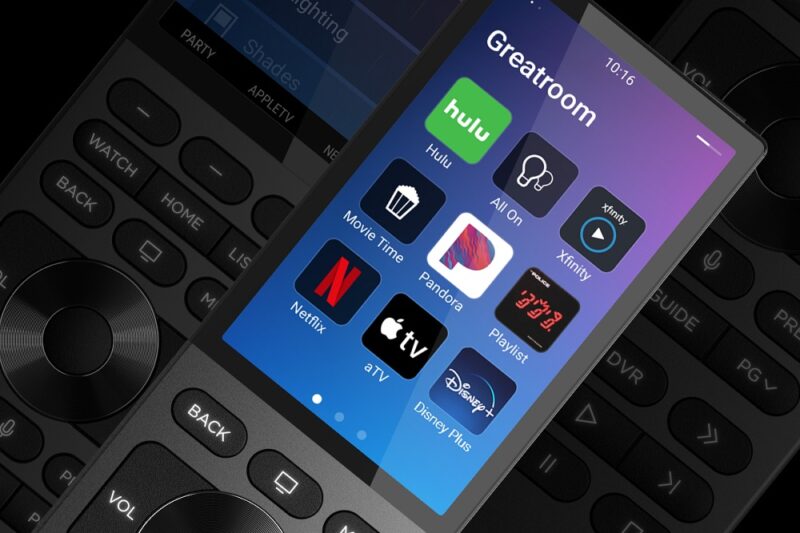
Whole home automation and control have quietly become the center of modern AV environments. What was once a layer for issuing commands now determines how people interact with technology in homes, workplaces and public spaces. As connected environments grow more sophisticated, integrators are discovering that the success of a deployment is often determined less by individual devices and more by how seamlessly the system can be controlled and experienced.
Across the APAC region where digital-first lifestyles and dense urban development have accelerated adoption, these expectations are evolving particularly rapidly. Users measure control systems against the intuitive experiences they encounter daily in consumer apps, expecting the same level of clarity, responsiveness and consistency. The region’s vertical cities and mixed-use developments also push integrators to design control platforms that function seamlessly across multiple devices and spaces.
Recent developments across residential and commercial control environments reinforce this direction. Next-generation interface updates and cloud-backed service architectures point to a wider shift toward systems that function as evolving ecosystems rather than static installations. Modern platforms increasingly pair intuitive user interfaces with service layers designed to keep systems current, allowing connected environments to improve and adapt well beyond the initial installation.
Evolving User Experiences
As interconnected technology becomes embedded in daily routines, users increasingly define experience by how naturally systems blend into everyday habits and operate together.

Even highly impactful installations can feel cumbersome if the user interface (UI) is inconsistent or difficult to navigate. By contrast, a clear, responsive interface can elevate a complex multi-device ecosystem into something that feels effortless.
This is also where the strength of cohesive system design becomes essential. Lighting, climate, shading, audio, security, access control, sensors and AV systems are expected to function as one coherent environment rather than a collection of loosely integrated products. For integrators, this places new emphasis on working with platforms and distribution partners capable of supporting that cohesion – through both the control technologies they manufacture and the breadth of adjacent categories they supply.
Across APAC, integrators are prioritizing ecosystems designed to support surveillance, networking, access control, AV distribution and smart home automation cohesion. The value lies not only in product availability, but in the assurance that these categories can be engineered, supported and maintained as a single integrated whole.
The result is reduced friction for both integrators and end users: fewer compatibility concerns, more consistent system behavior and a unified experience that remains modern throughout the system’s life.
Software-Managed Environments
While hardware remains important, software determines longevity, security posture, integration readiness and update cadence. Cloud-driven service layers now handle OS updates, security patches, device interoperability, remote diagnostics and feature releases – tasks previously dependent on manual, on-site support.
In APAC, where digital expectations evolve quickly and mobile-first habits dominate, these architectures have become essential. Users expect systems to remain current for years, not just at installation. For integrators, the reliability of a platform’s update cycle and its ability to evolve unobtrusively are now central to the user experience itself. Platforms that pair modern UI design with predictable background maintenance increasingly set the benchmark for the region.
Personalization at Scale
Personalization is becoming a defining expectation in APAC, shaped by diverse living arrangements, and varied commercial use cases. Multi-generational households, domestic staff, vertical housing and flexible working environments all require granular access control, contextual automation and routines that adapt intelligently to who is using the space and how.
Platforms built on next-generation control architectures – including those supporting more powerful logic engines and multi-device orchestration– are helping set this new baseline.
In residential environments, personalized scenes, dynamic lighting and responsive ambience allow each room to adjust to the habits and preferences of its occupants. Profiles shift automatically throughout the day, recognizing who is present and what activities are underway. Outside the home, meeting rooms prepare themselves for scheduled sessions, classrooms adapt to instructional formats, and hospitality venues adjust atmosphere, content and environmental controls as activity changes.
Across all these contexts, value lies in how cohesively the environment responds – the difference between a system that feels genuinely intelligent and one that behaves like a static set of commands. Today’s leading platforms unify user profiles, space awareness and device coordination to make that adaptability not just possible but expected.
Designing Natural Interfaces
Voice interfaces are growing across APAC, but usage patterns vary due to linguistic diversity and regional preferences. The next phase moves beyond simple command replication toward genuine intent recognition, enabling interactions that feel more conversational and less procedural. At the same time, gesture interfaces, presence sensing and passive automation are maturing, reducing manual touchpoints while preserving user agency. Platforms powered by more advanced processing architectures are also accelerating this shift.
Increasingly, the interactions users value most are the ones they barely notice, where the environment responds automatically yet predictably, enhancing comfort without adding complexity.
Scaling Across Environments
APAC is at the center of a growing convergence between residential and commercial expectations, from high-end homes in Australia to hotel–residence hybrids and multi-dwelling developments across key Asian cities. Residential simplicity now informs commercial UI design, while commercial-grade resilience is increasingly expected in premium residential environments. Control architectures that scale cleanly between these worlds are becoming foundational to mixed-use projects.
From Installation to Lifecycle Management
For integrators, designing for experience requires understanding user behavior, context and lifecycle expectations rather than focusing solely on initial system performance. Foundations such as network design, power stability and cybersecurity have become critical, and as platforms incorporate more AI-driven logic, data awareness and automation, the role of digital privacy and system trust becomes equally central.
At the same time, privacy-by-design principles are embedded into modern control platforms with enterprise-grade security, encrypted communications and a strong reliance on EB-compliant and certified third-party integrations to ensure data integrity and user confidence.
Additionally, maintenance like firmware updates, OS improvements, security patches and remote diagnostics are no longer optional add-ons – they are part of the core value proposition. Customers are increasingly comfortable with service plans that guarantee ongoing performance, and integrators who adopt proactive service models can deepen client trust while building recurring revenue.
The Next Phase of Control Platforms
The future of control platforms will be defined by adaptability. Users expect environments that respond intelligently and predictively, while still allowing them to step in and take over manually when needed. The most successful platforms will combine AI-enabled software foundations, refined interfaces and secure service architectures, ensuring innovation does not come at the expense of trust.
Developments across APAC’s rapidly evolving, digital-first markets control demonstrate how responsive software foundations and thoughtfully designed interfaces can elevate connected environments from functional to truly experiential. For integrators, manufacturers and technology providers alike, APAC offers a useful view into how the next generation of intelligent environments will take shape.
Adam Merlino, Vice President & General Manager, Asia Pacific, ADI Global Distribution