
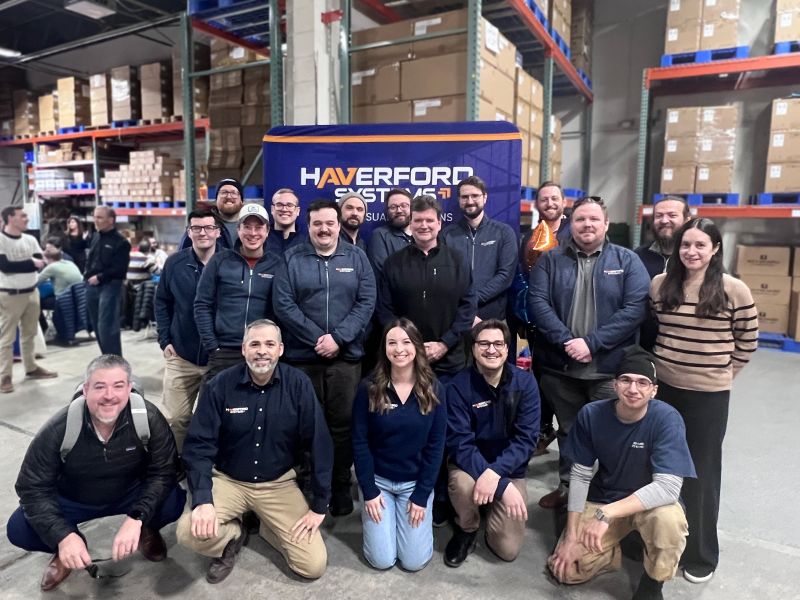
What You Need to Know:
- Haverford Systems transitioned to a 100% employee stock ownership plan on Jan. 23.
- The new structurual benefits transitioning to a ESOP S-Corps avoids federal and state corporate taxes, boosting cash flow
- ESOPs offer employees a proven path to bigger retirement savings
- Employee ownership supports reliable service and keeps motivation high
A New Approach to Business Sucession
As business succession planning becomes a growing focus for family-owned enterprises, Haverford Systems has chosen an alternative to acquisitions or private equity buyouts. The Downingtown, Penn.,-based, provider of audiovisual integration services, officially transitioned to a 100% employee stock ownership plan on Jan. 23.
This strategic move transfers the entire enterprise to its workforce, giving employees a direct personal stake in the future success of the organization.
What is an Employee Stock Ownership Plan?
An employee stock ownership plan is a long-term retirement benefit that utilizes a specialized trust to hold company stock for eligible workers. This financial structure allows everyday workers to build substantial wealth at no cost simply by continuing their daily employment. According to data from the National Center for Employee Ownership, participants in these plans typically hold twice as much in retirement savings compared to their peers at traditional companies. By implementing this model, Haverford Systems establishes a clear path for workforce financial security.
The Strategy Behind the Transition
Haverford Systems operated successfully as a family-owned business for nearly four decades under founders Hugh and Eileen Richards. When planning for the future, corporate leadership prioritized maintaining the established company culture and rewarding the dedicated workforce that helped build the brand.

Joseph Mulcahy, president of Haverford Systems, noted that the founders wanted the business to flourish long after their departure. He explained that the new ownership transition achieves this goal while fostering growth, encouraging innovation and creating a strong incentive for future hires to join the organization.
Structural Benefits for Employees and the Enterprise
The structural shift offers multiple distinct advantages for both the staff and the broader organization. Primarily, it establishes a succession framework that ensures leadership continuity. Because the existing executive team remains in place while employees gain shares over time, the new structure provides a retirement benefit alongside traditional savings programs like a 401(k) or 403(b).
Furthermore, because Haverford Systems operates as a registered S-Corp, the new ownership status exempts the enterprise from federal and state corporate tax obligations. This strategic tax exemption generates increased liquidity, improves cash flow and creates stronger opportunities for market expansion.
Stakeholder Impact and Future Outlook
Operating as early adopters in the audiovisual integration industry, Haverford Systems delivers scalable technology solutions. By joining roughly 6,300 similar enterprises across the United States, the organization now represents a growing national movement of 10.7 million active employee-owners.
How will this transition impact service delivery?
Clients and vendor partners can anticipate enhanced workforce motivation, a deepened focus on long-term value creation and a steadfast commitment to quality service. Corporate leadership expects the continuity of company culture to drive exceptional client experiences moving forward.
Executing the Financial Transaction
To execute the complex transition, Haverford Systems partnered with SES ESOP Strategies and its affiliated law firm Stevens & Lee. The advisory team conducted comprehensive financial due diligence, modeled the proposed structural framework and managed essential transaction components such as capital raising and term-sheet negotiations. Legal counsel prepared the sale documentation and negotiated financing agreements with senior lenders to ensure a seamless process.
Mulcahy stated that rewarding employee commitment remained the primary objective throughout the strategic planning process. He added that the advisory partners delivered exceptional technical guidance while positioning the workforce to capitalize on the future success of the company.