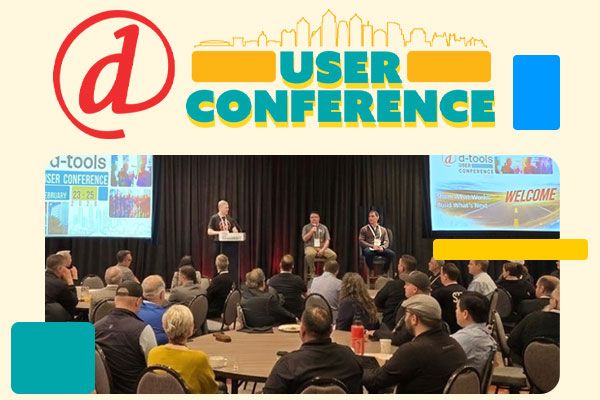
System integrators face a growing challenge: managing fragmented workflows across multiple software tools. To address this issue and explore the future of the integration industry, nearly 150 business leaders gathered in Atlanta for the inaugural D-Tools User Conference (DTUC).
Held at the Renaissance Atlanta Midtown from Feb. 23 to 25, 2026, the event brought together project managers, sales professionals and operations specialists. The three-day conference centered on improving business operations, sharing best practices and examining the software tools that drive modern integration workflows.
If you missed the event, here is a comprehensive look at the key themes, industry trends and business strategies discussed by leadership and industry experts.
What is the D-Tools User Conference?
The D-Tools User Conference is a dedicated industry event designed to help systems integration businesses streamline their operations. Operating under the theme “Share What Works. Build What’s Next,” the inaugural 2026 event combined high-level industry analysis with peer collaboration.
Attendees focused heavily on the D-Tools System Integrator (SI) and D-Tools Cloud platforms. The primary goal was to equip integration professionals with actionable strategies to increase profitability, optimize daily workflows, and prepare for upcoming market shifts.
Leadership Vision and Economic Outlook
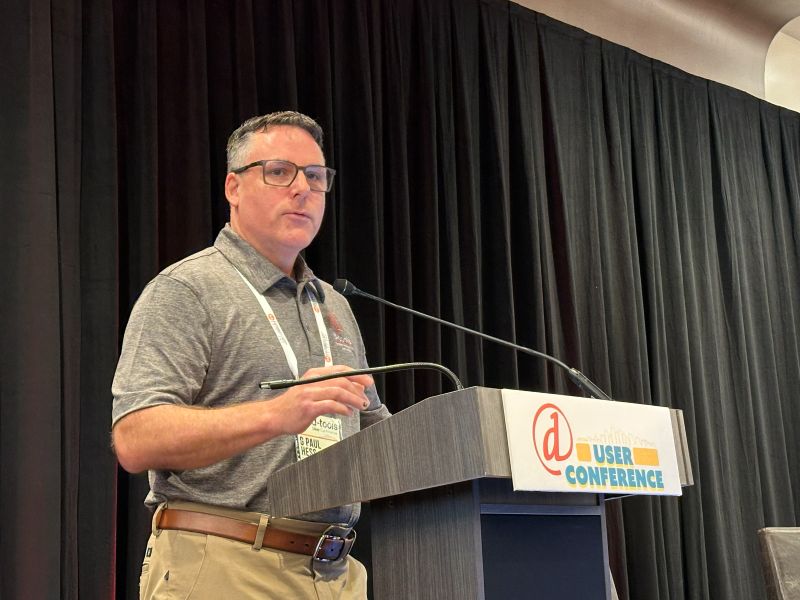
New D-Tools CEO G. Paul Hess offered his vision ahead of continuing to make D-Tools an essential software tool for integrators and suppliers. Courtesy / D-Tools
The conference began with a town hall session featuring outgoing D-Tools CEO Randy Stearns and newly appointed CEO G. Paul Hess. Both leaders offered a highly optimistic outlook for the systems integration industry over the next few years.
Stearns pointed to a stabilizing economy in 2026. He noted that corporate earnings are rising, inflation has cooled and recent supply chain disruptions have largely stabilized.
“Labor is a bit soft, but that actually creates opportunities for efficient, well-run integration businesses,” Stearns explained.
Hess expanded on this vision by highlighting the specific operational hurdles integrators face today. Many dealers actively juggle separate systems for customer relationship management, accounting, project management and service ticketing.
“When those systems don’t talk to each other, workflows become fragmented,” Hess noted. He emphasized that the company’s primary mission is to provide a unified platform that delivers clear business visibility and consistent execution.
Top Business Strategies for System Integrators
A major component of the conference involved presentations from specialized industry consultants. These experts provided objective, data-driven advice on how integration businesses can adapt to changing market conditions.
Maximizing Labor Profitability
Matt Bernath, president of the consulting firm VITAL, guided attendees through frameworks to assess and improve labor profitability. By thoroughly auditing their operational costs, integration businesses can identify direct pathways to boost their bottom-line margins.
Navigating the AI Search Revolution
Artificial intelligence (AI) is fundamentally changing how consumers find services. Ron Callis, CEO of One Firefly, shared a striking statistic: Google search volume dropped in 2025 while AI-assisted search volume surged by 400 percent. Callis outlined clear steps integration firms must take to capture this rapidly growing segment of AI-driven search traffic.
Shifting to a Service-Based Model
The integration industry is mirroring a transition that the broader IT sector experienced three decades ago. Joseph Kolchinsky, founder and CEO of OneVision Resources explained this ongoing migration toward a service-oriented business model. Integrators who adopt a proactive service mentality can build recurring revenue streams with clients who are eager to pay for ongoing support.
Eliminating Costly Miscommunications
Poor communication carries a steep financial penalty. Jason Sayen, founder of I AM SAYEN, revealed that companies lose an average of $12,506 annually per employee due to communication breakdowns. Sayen stressed the vital role of structured handoff meetings between project phases and well-documented workflows.
Modernizing Hiring Practices
Finding qualified labor remains a critical pain point for system integrators. Chris Smith, principal of TheCo Team, offered practical hiring advice to attract top talent. His primary recommendations included:
- Utilizing paid job advertisements rather than relying on free postings.
- Clearly stating the salary range in the job listing.
- Crafting compelling offer letters rather than simply sending a standard job description.
- Prioritizing “human first” qualities before technical skills during the evaluation process.
Product Innovation and Peer Collaboration
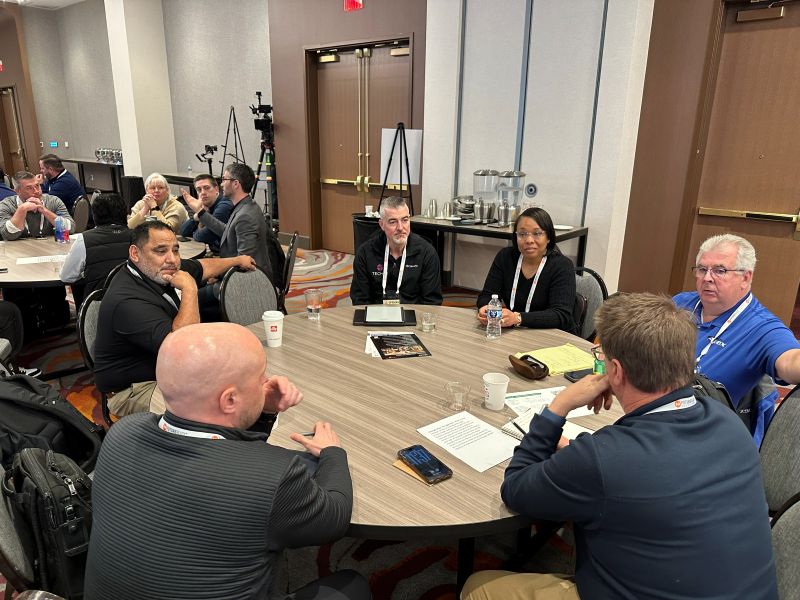
One of the most important sessions at the D-Tools User Conference was a two-hour peer-to-peer roundtable networking discussion covering key operational topics. Courtesy / D-Tools
Beyond the main stage presentations, the conference hosted targeted breakout sessions. These technical tracks allowed users to explore partner analytics and request specific features directly from the D-Tools development team.
Roundtable discussions became a focal point for peer-to-peer learning. Competitors and colleagues collaborated openly to solve shared operational challenges, discussing everything from fleet vehicle policies and invoicing protocols to the complexities of managing change orders.
Attendees responded positively to the collaborative environment. Joe Stadler, CFO at Third Coast Tech, highlighted the value of the software developers’ direct industry experience, noting that this background clearly influences how the platform evolves.
Other attendees echoed this sentiment. Earl Naegle, head of CI, Retail & Ecommerce at Neptune / Peerless-AV, called the two-day event “extraordinary,” citing the deep level of valuable content and professional networking.
Sponsors participating in the conference included AV Pro, Somfy, Sonos, Sony, Future Ready Solutions, Neptune / Peerless-AV, SurgeX / Ametek, and Wesco Distribution, creating additional opportunities for networking and industry collaboration.