
Editor’s Note: This article was submitted on behalf of Kramer. The views presented reflect the sole opinions of the author, Tony Leedham, chief commercial officer at Ashton Bentley (by Kramer).
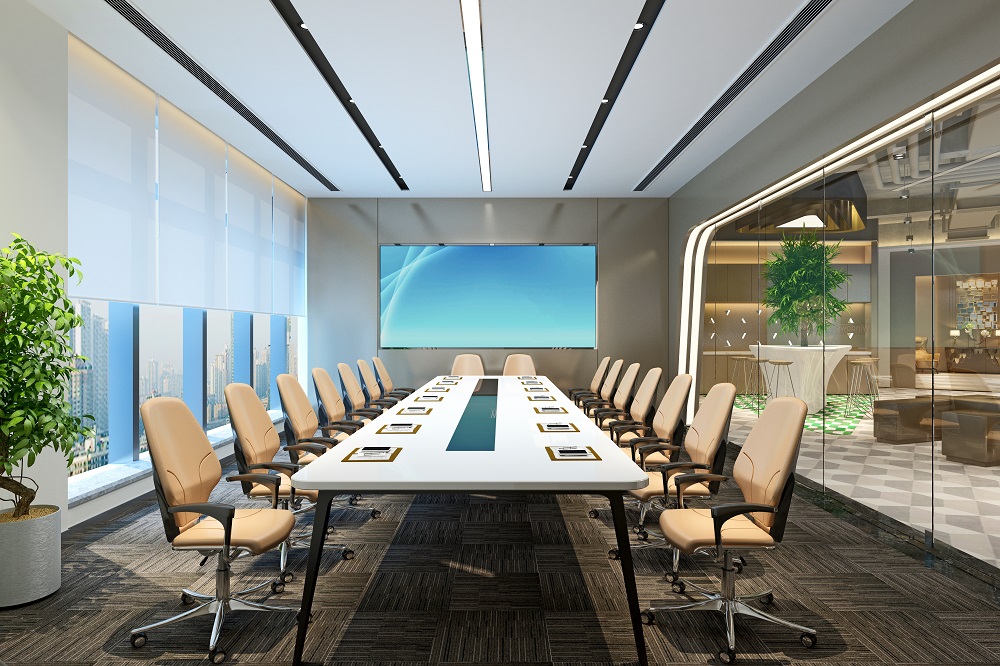
In an industry often defined by complexity, we’ve always believed in something simple: meeting rooms should just work. That idea didn’t come from a marketing plan or a product roadmap. It came from frustration.
One of our founders was working in a global banking environment and facing a challenge many IT and AV leaders will recognize — videoconferencing demand was growing rapidly, but meeting rooms simply weren’t keeping up.
Despite clear designs and requirements, results were inconsistent. Systems varied from room to room. Integrators substituted components. Reliability suffered. Scaling a global meeting room strategy proved almost impossible.

So instead of working around the problem, we built what we wanted to buy, and that was the starting point for Ashton Bentley.
From the beginning, the idea was simple but different: treat the meeting room as a product — not a project. Something standardized, repeatable and easy to use.
We weren’t trying to add more technology. We were trying to remove the complexity that made meeting rooms difficult in the first place.
You shouldn’t need an instruction book to use a meeting room. And in reality, 80% of what people do in a meeting room can be delivered well without overengineering the space.
That philosophy still underpins everything we do today.
Challenging an Industry Built on Complexity
For years, the AV industry has been driven by what is possible, rather than what is necessary.
Systems became more sophisticated, but they often got a lot harder to use in the process. Organizations invested heavily in equipment that was underutilized, inconsistent, or simply didn’t deliver the experience users expected.
We were all part of that ecosystem at one point. But it became clear that the model wasn’t sustainable.
Instead of continuing down that path, we focused on standardization and user experience.
This was not to limit functionality, but to prioritize what matters. To create meeting environments that are consistent, reliable, and easy to deploy at scale. That meant making decisions about what to include — and just as importantly, what to leave out.
The Reality of Being Acquired
In 2024, Ashton Bentley was acquired by Kramer. Like any acquisition, it came with both excitement and concern.
From our perspective, the biggest opportunity was global reach. We had always sold internationally, but suddenly we had access to a much broader infrastructure and presence.
At the same time, there was a natural concern about identity. We didn’t want to lose what made Ashton Bentley different. We didn’t want to become just another product line or model number within a larger organization.
Because the reality is, Ashton Bentley isn’t just a product. It’s a solution to a set of problems. And the name itself has come to represent that in the market. If you reduce that to a SKU, you lose what makes it valuable.
Two years on, that balance has largely been maintained. We’ve retained our identity while gaining access to resources, expertise, and reach that we simply didn’t have before.
A big part of that comes down to approach. Kramer has been very deliberate about letting us do what we do best, in the way we do it best. They haven’t tried to reshape the business — and that’s made a real difference.
Too often, when a large company acquires a smaller one, it strips away what made that business unique in the first place. It’s been refreshing to see the opposite here.
That said, it’s important to be honest: scaling doesn’t happen automatically.
Scaling isn’t instant
Going into the acquisition, there’s always a hope that growth will accelerate quickly. We expected that to some extent. In reality, it took longer; you have to realize that the tap doesn’t just turn on overnight.
What we’ve learned is that success depends on people. It depends on identifying the right individuals within a larger organization, building relationships, and helping them understand how to position and sell what you do.
That’s especially important because Ashton Bentley brings a slightly different approach.
Historically, Kramer has been very strong as a product-led, channel-focused business. What we bring is a deeper focus on the end user — how the room is experienced, not just how it is built.
That combination is where the real opportunity lies.
And now, two years in, we’re starting to see that potential come through.
Preserving What Matters
One of the biggest risks in any acquisition is losing what made the smaller company successful in the first place. For us, that comes down to culture and agility.
As a smaller business, we’ve always been able to move quickly — this includes the way we respond to customer needs, solve problems, and develop ideas without layers of complexity.
Sometimes that’s as simple as walking across the office and solving something in a conversation. That speed matters. If we lost that, it wouldn’t be the same business.
At the same time, being part of a larger organization brings clear advantages — from financial resources to processes and global reach. The challenge is balancing the two.
What we’ve found is that you need to focus on the core overlap, the reason the acquisition makes sense in the first place, and not worry too much about the areas that don’t align perfectly at the start. No two companies seamlessly fit together on day one.
My advice to anyone going through a similar process is simple: do it for the right reasons, and don’t be scared of the edges. Those differences aren’t necessarily weaknesses. In many cases, they’re where the real value sits.
Telling the Story Better
If there’s one area where we see the biggest opportunity now, it’s not in technology, but communication. Historically, we haven’t shouted about what we do.
We’ve focused on building the right solutions, but we haven’t always told that story as effectively as we could. That’s starting to change.
What’s interesting is that many of the messages we’re focusing on today aren’t new. In fact, we were talking about the same challenges nearly ten years ago.
Funnily enough, I was just chatting with colleagues about my recent discovery of some simple animated videos we put together a decade ago to explain the problems Ashton Bentley was invented to solve in our industry. It is striking (even humorous) that these videos are nearly 100% as accurate and needed today as they were all those years ago. We were talking about it then, and the industry is only just now starting to catch up.
The reality is, those challenges haven’t gone away. Meeting rooms are still too complex in many organizations. They still fail too often. And they still cost more than they should, not just in terms of the equipment, but in all that lost time and productivity. We’ve actually studied the data on how much money is lost in organizations in each of these meetings, and the numbers are pretty staggering.
It’s both validating, humbling, and sobering to realize that the core idea we started with at the very beginning is still as relevant today as it was then.
Why Simplicity Still Matters
Workplace technology continues to evolve, from hybrid work to AI-driven collaboration, and it’s all too easy to focus on what’s new, but at its core, the meeting room remains a human space.
People need to walk in, start a meeting and focus on the conversation — not the technology. Our role is to make that experience as seamless and as simple as possible.
Now, that doesn’t mean standing still. Technology will continue to improve, integration will deepen, and new capabilities will emerge; but the principle remains the same.
In a world of increasing complexity, simplicity isn’t just desirable; it’s absolutely essential.
Tony Leedham is Chief Commercial Officer at Ashton Bentley (by Kramer).