
Key things to know:
- Black Box AVS designed, engineered and implemented a complete AV system for the Ernest Tubb Record Shop on Lower Broadway in Nashville.
- The system features Yamaha CZR line arrays and point-source cabinets plus NEXO ePS Series loudspeakers.
- The venue’s long narrow brick-and-wood interior ruled out heavy acoustic treatment, so the team used coverage, delay zones and precise tuning.
- iPads tied to centralized racks handle front-of-house and lighting control without traditional booths.
- Owner Martin Lawrence says the project signals a shift in Nashville bar culture toward quality sound over sheer volume.
What Did Black Box AVS Build at Ernest Tubb Record Shop?
Black Box AVS designed, engineered and implemented a complete AV system at the Ernest Tubb Record Shop on Lower Broadway in Nashville. The work went well beyond an audio upgrade. The company built the venue’s full technology backbone, including network infrastructure, wireless connectivity, centralized control systems, equipment rack systems and integrated lighting control.
“The project required more than an audio upgrade,” says Martin Lawrence, owner of Black Box AVS. “Black Box AVS was tasked with creating a cohesive technology ecosystem that supported live music, venue operations, guest experience, networking, lighting control and long-term serviceability.”
What Acoustic Challenges Did the Building Present?
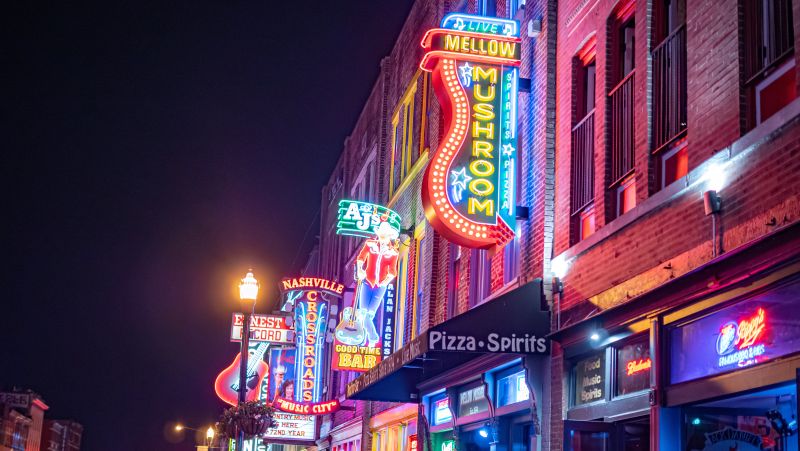
The building presented a classic Broadway challenge: long and narrow, with exposed brick walls and wood floors throughout. Heavy acoustic treatment was not an option in the historic space. So the team leaned on coverage, delay zones and precise tuning to control the room instead.
“It’s a long skinny building, all brick, both sides, and just wood floors,” says Lawrence. “The goal was simple in concept but demanding in execution: deliver consistent SPL from front to back while preserving the twang of a steel guitar, the resonance of an upright bass, and the delicate textures of acoustic sets. In a city where every note tells a story, balance wasn’t optional – it was essential.”

Which Speakers and Equipment Power the System?
The system runs on Yamaha CZR line arrays and point-source cabinets chosen for clarity, punch and musical fidelity. NEXO ePS Series loudspeakers round out the rig with high-output full-range performance, precise coverage, selectable HF directivity and flexible mounting options for the space. Front fills keep the first rows clear while the compact footprint preserves sightlines and the venue’s open feel.
The wider technology stack ties the venue together across four floors. Chauvet fixtures, Luminaire software and Visual Productions cores fold dynamic lighting into the same control interface. Netgear switches and Ruckus access points handle connectivity, while Mid-Atlantic racks and Panduit cable management keep the system clean and serviceable.
“The CZRs really let every instrument breathe,” says Lawrence. “You hear the subtle harmonics in a steel guitar, the snap of an upright bass, and the shimmer of acoustic strings – all without cranking the volume.”
How Does the Venue Control Sound and Lighting?
The venue controls sound and lighting through iPads linked to centralized racks in an AV closet. That setup enables full front-of-house and lighting control without traditional booths, which preserves floor space and sightlines. The same interface manages audio and the integrated Chauvet lighting system.
The design also proved adaptable mid-project. When stage layouts changed, the team upsized the mains to 15-inch drivers without losing the system’s clear detailed character. Patrons now hear consistent high-fidelity sound on every floor, from the rooftop bar to the vinyl shop.
What Were the Results for Patrons?
The results were immediate, with patrons able to hear instruments clearly rather than just loud volume. The system delivers depth, clarity and punch across the room while keeping each instrument distinct. Audiences linger longer and take in full performances rather than tuning out the noise.
“People say it sounds great. It’s not super loud – you actually hear the individual instruments,” says Lawrence.
How Does This Project Reflect a Shift in Nashville Bar Culture?
The project reflects a move away from bars installing the cheapest and loudest systems toward intentional sound built around the guest experience. Lawrence frames the installation as a cultural change for Lower Broadway, not just a technical one. The aim is a room where the music lives and breathes rather than simply overpowering the crowd.
“It’s helping start that shift from bars putting in systems that are just the cheapest and the loudest to something that’s different – building a system from the ground up that makes the user experience enjoyable,” says Lawrence. “At the end of the day, that’s the goal – building a spot I’d want to take friends to when they come to town.”