For many commercial AV integrators, the strongest marketing asset is not a brochure, a capabilities deck or even a polished website. It is the work already being installed in conference rooms, houses of worship, schools, offices and customer-facing environments every week.
That was the core lesson from a recent case study with Hensinger AV, a New Jersey-based integrator that used real project footage as the foundation for a more predictable demand-generation system. The result was not simply more activity. Hensinger AV doubled annual revenue from 2024 to 2025 while completing 30 fewer jobs.
For AV company owners, that combination matters. Growth is not always about taking on more projects. In many cases, it is about creating more visibility for the right kinds of projects, attracting better-fit prospects and giving the sales team more qualified opportunities to pursue.
“We’re now getting consistent, high-quality leads. People who are ready to take action and not just kicking tires. No more cold calling and no more chasing old clients. We now have a steady flow of warm prospects who actually want to work with us.” Max Hensinger (owner, Hensinger AV)
Most integrators already have proof. They have installed video walls, meeting-room systems, digital signage, sound systems, collaboration spaces, control systems and complex infrastructure that would immediately resonate with the right buyer.
The challenge is that this proof often stays hidden. It lives in a phone camera roll, a project folder, a social media post with limited reach or a portfolio page that prospects only see after they already know the company exists.
That creates a familiar problem for AV firms. Referrals are valuable, but unpredictable. RFPs can be competitive and timing-dependent. Website leads may be inconsistent. Meanwhile, the company’s best evidence of capability is not being used often enough to create demand.
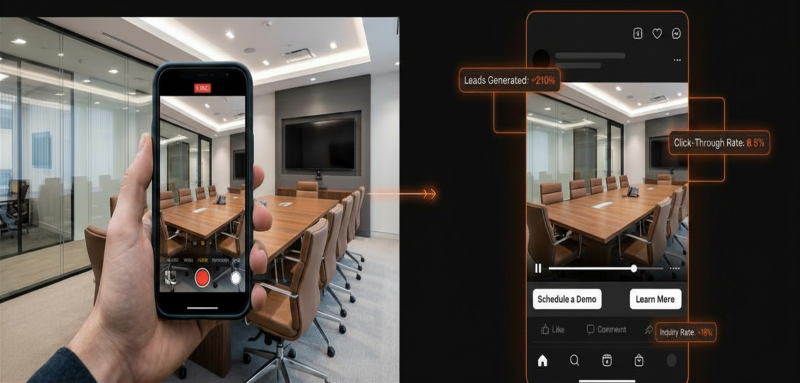
The Hensinger AV case study shows a different path. Instead of treating completed projects as one-time deliverables, the company turned them into ongoing sales assets. Real footage from real installations became the raw material for targeted video ads. Those ads helped prospective buyers see the kinds of spaces, systems and outcomes Hensinger AV could deliver before ever speaking with sales.
That distinction is important. Buyers do not always know how to describe what they need. But they recognize a room, a workflow problem or a finished system that looks like their own environment. A short video of a completed AV project can communicate credibility faster than a paragraph of service copy.
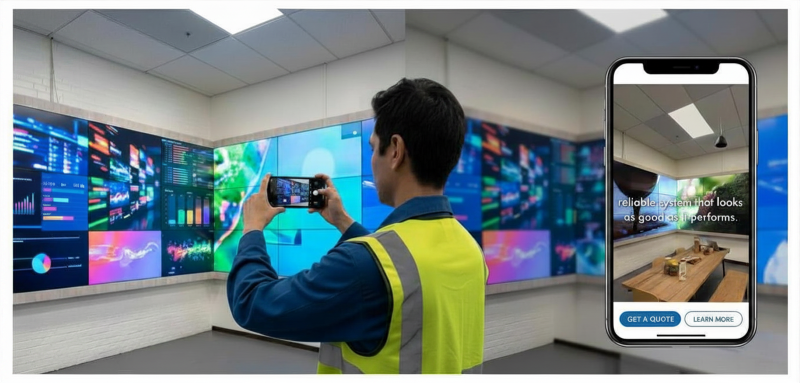
This is also why the footage does not need to look like a national commercial. For many integrators, simple smartphone clips can be enough if they capture the room, the problem, the installation and the finished result.
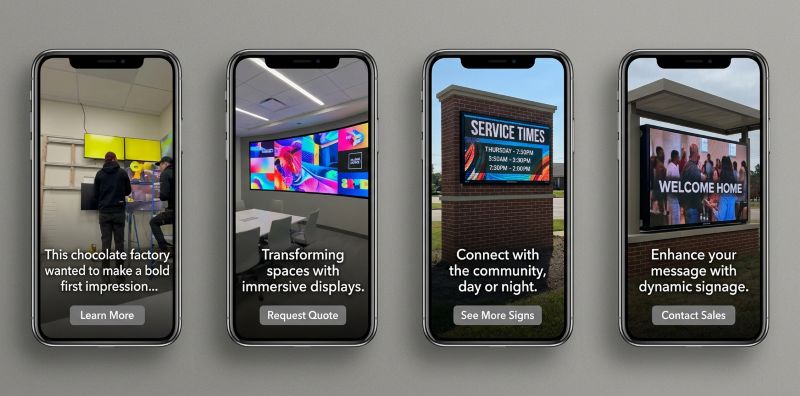
The process is built around three practical steps:
- Capture your best work;
- Turn that raw footage into video ads;
- Run campaigns to create qualified opportunities.
To make that process easier, LZR Leads created a practical 6-page On-Site Video Capture Guide that field teams can use to record before, during and after footage without becoming content creators. AV owners who want to explore the strategy can learn more or schedule a call at lzrleads.com.
The broader takeaway for integrators is clear. If your company already does excellent work, the next growth lever may not be doing more marketing in the generic sense. It may be documenting the work you already do and putting that proof in front of the buyers most likely to value it.
In an industry where trust is built visually, every completed project can become more than a finished job. It can become the next reason a qualified prospect decides to start a conversation.