
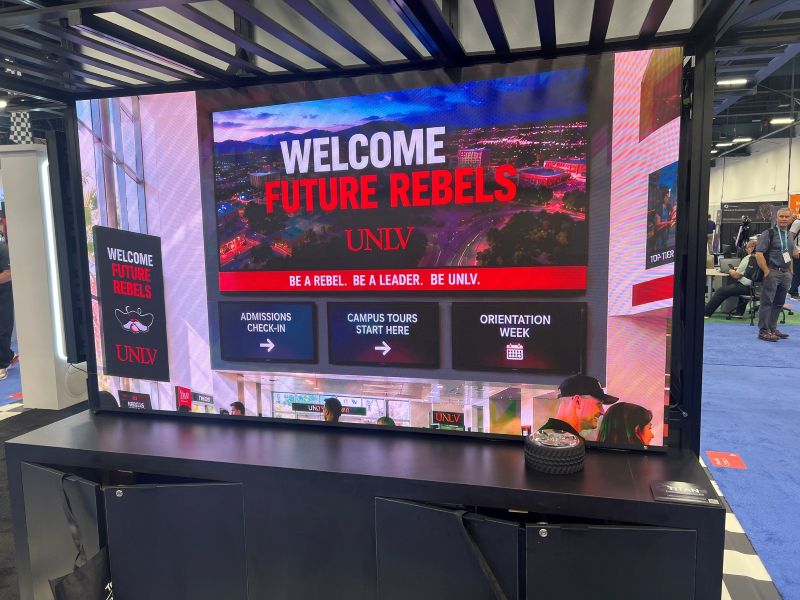
As I walked the InfoComm 2026 show floor for my 21st annual visit, one observation kept reasserting itself: The era of manufacturers settling for just selling boxes is over. Today, the pro AV industry is all about outcome assurance.
After touring dozens of booths and speaking with countless executives at the show, I’m convinced that the experience economy has reshaped how this industry frames its value proposition. For integrators and consultants, that shift isn’t abstract. It’s the difference between competing on price and competing on selling value and locking down repeat business.
The Experience Economy Is Now the Default
This was abundantly evident at the AtlasIED booth, where Gina Sansivero, vice president of marketing and corporate communications, walked me through a portfolio strategy seven years in the making.
The company rounded out its Atlas+Fyne loudspeaker family at the show with the addition of IsoFlare pendant models, which join existing in-ceiling and surface-mount options. But the significance isn’t more SKUs; instead, it’s the ability to deliver consistent voicing across an entire venue. That ranges from intimate bar areas with low ceilings to expansive lobby spaces that require pendants.
“You walk through the casino and our Atlas+Fyne products have consistent voicing throughout that entire venue,” Sansivero explains. The practical implication for integrators is significant: Uniform voicing becomes a differentiating selling point to the end client. It’s a vital opportunity for the integrator to position themselves as system designer — not merely a product installer.
AtlasIED’s Atmosphere AZP Smart Amplifiers reinforce a broader trend toward industry efficiency and frictionlessness. The 1RU unit unites onboard DSP, a soundmasking generator, bell scheduler, recorded message scheduler and power sharing in a single device. What does that mean for integrators? Fewer boxes, less rack space and functionality that previously required a dedicated DSP — all from one platform.
Meanwhile, L-Acoustics approached the experience economy by adding extra heft to the live-performance category. The company’s biggest story at InfoComm was the L1 line array system and CS1 subwoofer. The flagship system with inherent cardioid behavior, 160-plus decibel capability and up to 26 decibels of rear rejection is already out with Bruno Mars and Harry Styles on touring pilots.
An even more consequential development for integrators, however, may be Source Intelligence, a machine-learning tool running on the L-ISA II processor.
AI Matures to Become a Working Tool at InfoComm 2026
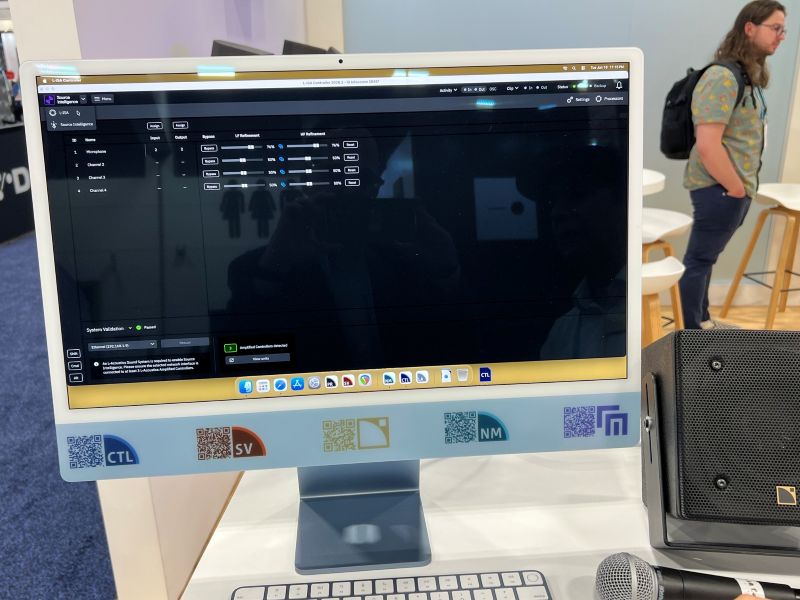
L-Acoustics’ Source Intelligence isolates a performer’s voice from everything else reaching the microphone. Photo by Emerald/Commercial Integrator.
After my second full day walking InfoComm 2026, it had become clear that AI has graduated from marketing buzzword to real-world operational asset. L-Acoustics’ Source Intelligence isolates a performer’s voice from everything else reaching the microphone — feedback, crowd noise, etc. — without requiring manual intervention.
“The AI homes in right on voice and presents voice and voice only, eliminating everything else,” Mary Beth Henson, director of media relations, L-Acoustics, says. That’s a legitimate workflow improvement with real-world implications for integrators.
Crestron also advanced the AI conversation. Alex Peras, recently promoted to executive vice president, product and engineering, walked me through how the company is connecting LLMs to its 4-Series control systems. “You can now take any program that’s built in SIMPL Windows or SIMPL# Pro and compile it with our MCP modules,” Peras says. This will allow integrators to integrate their preferred LLM and expose deterministic control parameters to AI-driven natural-language commands.
Peras describes it as “bleeding-edge AI,” and the business case is clear. There is a vast installed base of 4-Series processors already deployed worldwide. The ability to layer natural-language control onto that installed base turns existing accounts into upgrade opportunities. That’s a recurring-revenue opportunity that won’t require acquiring new clients.
Meanwhile, the Espai Barça integration at Camp Nou illustrates how content, collaboration and control architecture can scale from a single conference room to an entire stadium. The DM NVX and NAX platforms anchor that flexibility.
AV-Over-IP Meets IT Accountability at InfoComm 2026
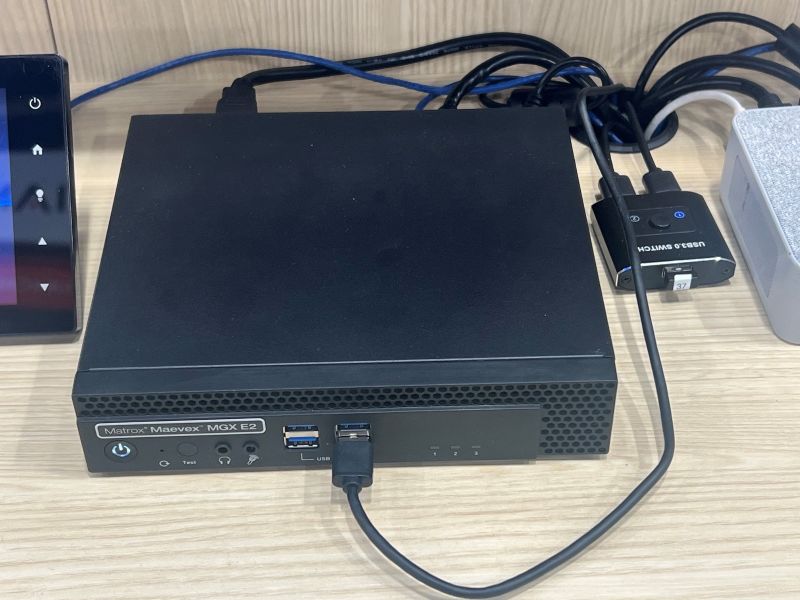
Matrox Video’s Maevex MGX video encoders and decoders deliver 4K60 HEVC 4:4:4 image quality at one-twentieth the bitrate of conventional light-compression solutions. Photo by Emerald/Commercial Integrator.
The entire pro AV industry may be weary of hearing the word “convergence,” but there was evidence at InfoComm 2026 that the network economics have caught up to the hype. The Matrox Maevex MGX Series made the most direct case. The IPMX-ready video encoders and decoders deliver 4K60 HEVC 4:4:4 image quality at one-twentieth the bitrate of conventional light-compression solutions.
“[That] means 20 times more capacity for streams on the network in the same environment,” Ron Berty, business development manager at Matrox Video, says. For integrators serving enterprise and mission-critical clients, that math paves the way for a new, perhaps more productive, conversation with IT leadership. A larger number of simultaneous streams on existing network infrastructure means a lower total cost of ownership and more attractive client proposals.
The next-generation Commercial Installation Solutions Ecosystem from Yamaha advances a parallel argument on the audio infrastructure side. The new DME Series DSPs, XMS Series power amplifiers, MCP2 wall controller, TCD10 touchscreen and updated ProVisionaire software serve, in effect, as a unified management environment. The integrator value lies in centralizing configuration and ongoing management in a single platform rather than cobbling together disparate tools.
Repeatability as an Integrator Margin Strategy
There was lots of sizzle — and plenty of steak — for integrators when it came to the experience economy and AI tools. But I’d argue that the booths with the most compelling implications for integrator profitability were those that foregrounded the install process itself.
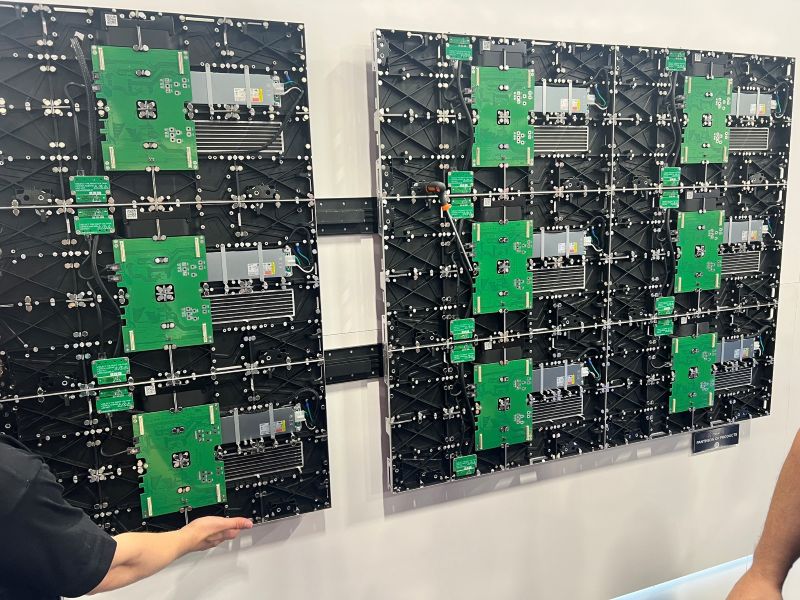
Total LED designed its panels, mounting hardware and trim as an integrated system, attaching the LED wall to a French cleat system. Photo by Emerald/Commercial Integrator.
Total LED‘s approach was arguably the clearest demonstration. The company designed its panels, mounting hardware and trim as an integrated system, attaching the LED wall to a French cleat system. This physically separates the LED wall from the architectural wall behind it.
“One of the main problems with seaming that we see in LED walls is the architectural wall not being flat, and that translates into seams on the LED wall,” Doug Wack, president, Total LED, says. By decoupling the LED wall’s flatness from the architectural wall’s flatness — and adding side-to-side and top-to-bottom latching — the system eases DVLED installation, while also having positive implications for installation speed and reproducibility.
For integrators, this solution serves as a reminder that repeatability is a quiet, but important, margin lever. Designs like these help to shrink labor hours, reduce technician callbacks and produce better, more consistent results.
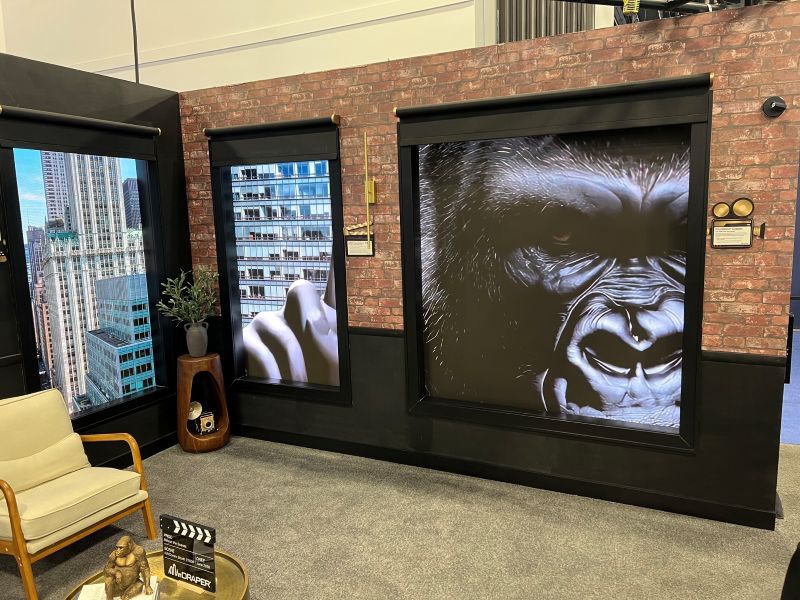
At InfoComm 2026, the Draper booth channeled the very best of a classic 1930s theater, including recruiting King Kong! Photo by Emerald/Commercial Integrator.
Draper made a complementary argument on the structural side of videowall installations, framing its Foundation ONE mounting system and Foundation Studio design-and-quoting tool as two sides of the same efficiency coin.
Foundation Studio is a web-based platform that helps integrators plan flat and curved videowall layouts before a panel even ships. Foundation ONE is the physical mounting system that enables integrators to execute that plan quickly and with precision. The approach aligns naturally with what Total LED articulated: a faster, more repeatable process that can scale profitably across many jobs.
Draper also leveraged InfoComm 2026 to launch the Ultimate Folding Screen (UFS) Lite, a portable projection screen that enables single-person setup in under five minutes. This reflects the reality that small meeting rooms still represent a significant portion of the integration workload and that labor efficiency on those projects matters just as much as it does when integrators are installing LED videowalls.
MiP Technology Draws Attention

The Planar Mantis Series targets the rental-and-staging market and seems ideally positioned for integrators committed to making a strong play for experiential and immersive investment. Photo by Emerald/Commercial Integrator.
Speaking of LED, my trip to the Planar booth and conversation with Robert Detwiler, senior director, product management and training, covered a range of impressive offerings. The company’s EverPixel proprietary MicroLED-in-Package (MiP) technology was arguably the booth’s biggest draw, but I was equally impressed with the Mantis Series, which targets the rental-and-staging market and seems ideally positioned for integrators committed to making a strong play for experiential and immersive investment. The Planar 21by9 Series, meanwhile, brings ultra-wide 21:9 LCD to various commercial contexts.
Another key display leader, Panasonic Projector and Display Americas and its MEVIX brand, added an exclamation point to its commitment to LED. The company highlighted its 137-inch and 165-inch all-in-ones at InfoComm. It also showcased the 40,000-lumen PT-RQ45K projector, which is ideal for projection-mapping applications.
And Panasonic’s HIVE acquisition adds another interesting wrinkle, pointing toward an end-to-end workflow from content management to display output. This is yet another efficiency argument aimed at reducing integration complexity and, thus, increasing integrator efficiency.
Distribution as a Strategic Resource at InfoComm 2026
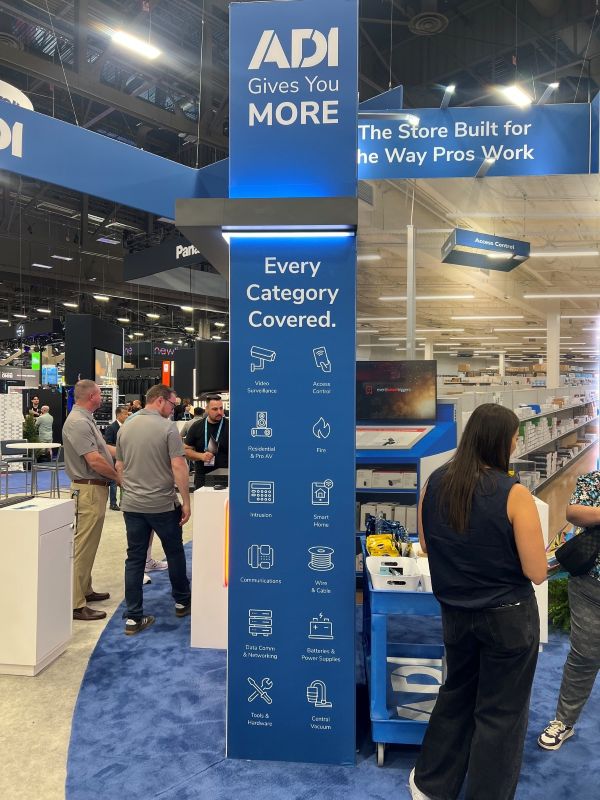
ADI sought to exemplify the “ADI Gives You More” mindset at InfoComm 2026. Photo by Emerald/Commercial Integrator.
ADI tied many of these threads together on the distribution side. Cynthia Menna, VP and general manager, AV, with ADI, articulated a vision for the organization that treats product fulfillment as just the starting point.
“We want to make sure that we are giving our customers and our supplier partners more in terms of goods, services, support and resources,” Menna says, alluding to the “ADI Gives You More” initiative. As projects grow more complex and routinely span audio, video, networking and control, a value-added distributor can support the full stack. For integrators, that can make the difference between having a strategic channel partner and having a company that simply moves boxes.
For me, the key takeaways from InfoComm 2026 boil down to this: smarter products, more repeatable installs and greater network friendliness. And for integrators who recognize those developments as clear, unequivocal business opportunities, the possibilities are limitless.