From Cable Clutter to One-Connection Simplicity
The shift toward USB-C is closely tied to broader trends in device design and workplace technology. Users no longer want to manage multiple connections for HDMI, USB peripherals and power in a typical meeting space. Instead, they expect a seamless “plug-and-present” experience.
USB-C delivers exactly that: a single cable that instantly connects a personal device to the room’s full AV ecosystem. Yet for all its simplicity on the surface, USB-C introduces a new layer of complexity beneath the hood.
The Hidden Complexity Beneath the Connector
Unlike traditional AV connections, USB-C is not a single protocol. It is a platform that can support multiple signal types simultaneously, including USB 2.0, USB 3.0 and 3.1, power delivery and DisplayPort Alternate Mode (DP Alt Mode). The exact capabilities of any given USB-C connection depend heavily on the cable itself.

 The challenges commence here. There is a large variety of USB-C cables on the market, and not all are equal. Some may support only charging while others enable high-speed data, video transport or full Thunderbolt performance. Visually, they often look identical.
This variability can lead to unpredictable system behavior. A cable that works perfectly in one scenario may fail to deliver video, limit bandwidth or restrict power in another. Even more complex, certain functions compete for the same internal wiring. For example, enabling DisplayPort video over USB-C may reduce or eliminate USB 3.0 or 3.1 data capabilities, depending on how the cable is configured.
For integrators and IT teams, this creates the critical need of visibility into what each cable can accomplish.
Bringing Clarity to USB-C with Advanced Testing
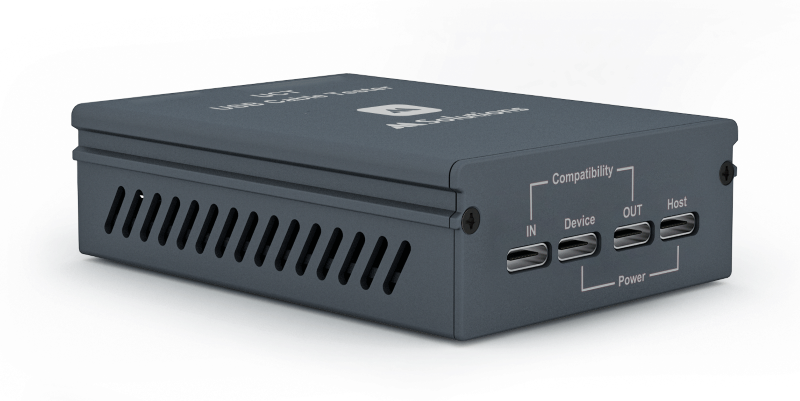
To address this uncertainty, MSolutions has developed tools designed specifically for the realities of USB-C infrastructure. The company’s MS-TestPro AV tester, a handheld device made for installers to test signal presence, cable integrity and more, can be paired with specific modules that serve specific testing purposes. This includes the UCT module for deep analysis of USB-C cables and connections far beyond what’s possible with visual inspection alone.
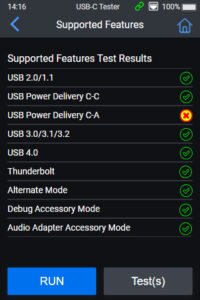
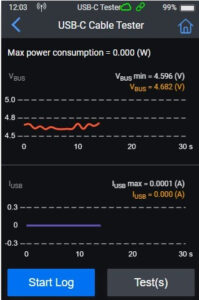
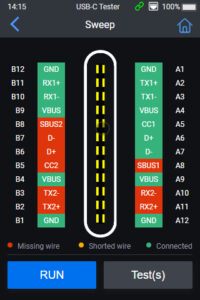
The UCT module can verify wire mapping, identify supported USB versions, confirm DisplayPort Alternate Mode compatibility and measure power delivery capabilities. It also analyzes bandwidth characteristics and device hierarchy within the USB chain, offering a comprehensive view of how signals move between host and connected devices.
This level of insight is increasingly essential in modern AV environments, where USB connectivity underpins everything from cameras and microphones to displays and collaboration systems. By identifying issues before they impact performance, integrators can ensure reliable operation across meeting rooms, classrooms and hybrid workspaces.
 Extending USB-C Beyond the Cable
While USB-C excels at simplifying connectivity, it also introduces another practical limitation: distance. Standard USB-C cables are inherently short-range, which can be problematic in larger meeting rooms or lecture halls where devices and displays are separated by several meters. Extending those signals without compromising performance has traditionally required complex workarounds.
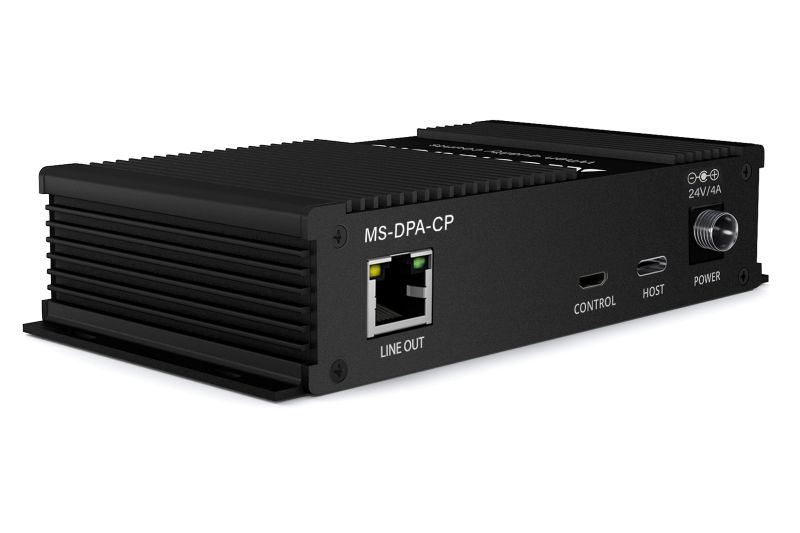
MSolutions addresses this challenge with its MS-DPA Series, a family of extenders designed to transport DisplayPort Alternate Mode signals over longer distances while preserving the one-cable experience. These solutions enable the transmission of uncompressed 4K video, USB data and power over a single category cable, supporting distances up to 100 meters without requiring drivers or software. The result is a plug-and-play infrastructure that maintains signal integrity while dramatically simplifying system design.
As demonstrated in real-world deployments, the MS-DPA family allows integrators to extend USB-C connectivity across meeting and learning spaces without sacrificing performance or user experience. MSolutions will debut the latest extender in this series, the MS-DPA-HCP, at InfoComm, adding a switchable HDMI input alongside USB-C connectivity fort added source flexibility. It can be seen (along with the MS-TestPro and UCT module) at the booth of Stirling Communications (C7685), which distributes MSolutions products in the United States.
Please visit https://www.m4sol.com for more information.