
Editor’s Note: This post featuring how Panasonic 4K projectors turned the Smithsonian Castle into an AI-driven public art canvas in Washington, D.C. originally published on Aug.17, 2026. It has since been updated as of Oct. 2, 2026.
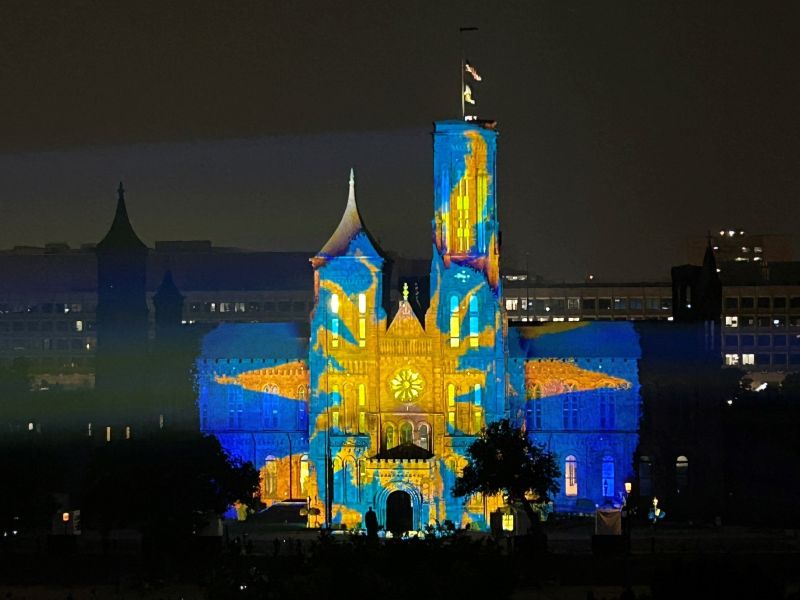
Panasonic Projector & Display Americas powered one of the most ambitious projection projects on the National Mall this year, transforming the Smithsonian Castle into a living, AI-driven canvas. For integrators who work with large-scale projection, the two-night activation offers a real-world look at what precision, scale and coordination can deliver.
Key Things You Should Know
- Panasonic Projector & Display Americas powered “Smithsonian Dreams,” a large-scale public art experience on the National Mall in Washington, D.C., July 17-18, 2026.
- Media artist Refik Anadol created the piece, presented by the Smithsonian, using a custom AI system trained on nearly two centuries of Smithsonian collections.
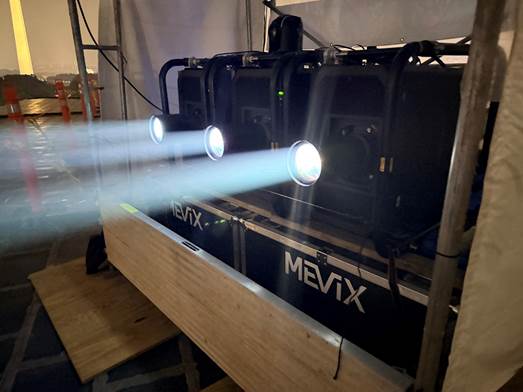
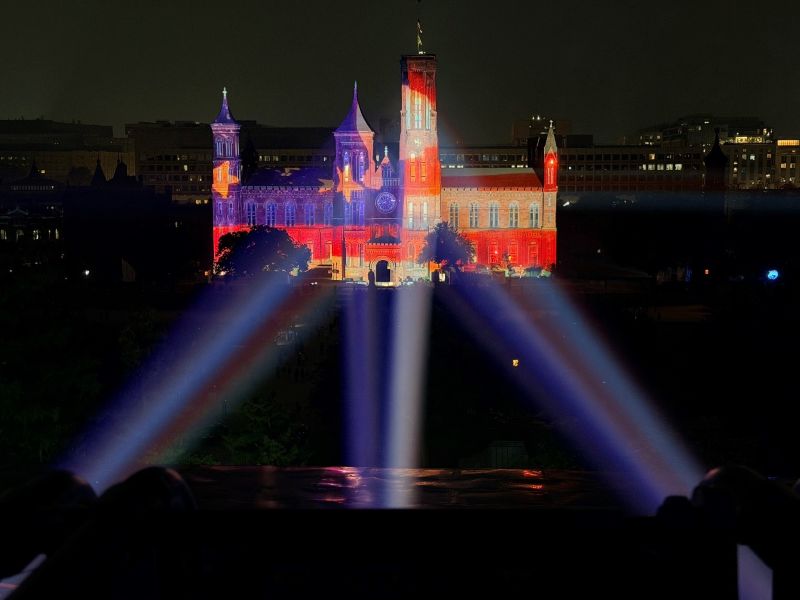
- The installation used 44 Panasonic PT-RQ45K Series 4K projectors to map the Castle’s 145-foot façade.
- One projector was positioned more than 700 feet from the Castle, underscoring the technical complexity of the activation.
- The project coincided with America’s 250th anniversary and the reopening of the Smithsonian Castle after a major renovation.
- It builds on prior Panasonic collaborations with Anadol, including WDCH Dreams at Walt Disney Concert Hall and installations at Frieze Los Angeles.
What Was Smithsonian Dreams?
“Smithsonian Dreams” was a two-night immersive public art experience that turned the Smithsonian Castle into an evolving, AI-driven visual display on the National Mall from July 17-18, 2026. Created by internationally acclaimed media artist Refik Anadol and presented by the Smithsonian, the activation projected continuously changing digital artwork across the historic façade.
The piece combined projection mapping, AI, sound and Panasonic’s projection technology. Together, those elements reimagined one of the nation’s most recognizable cultural landmarks as a living archive of human imagination.

How Did the AI System Create the Artwork?
The artwork came to life through a custom AI system, built by Refik Anadol Studio and trained on nearly two centuries of Smithsonian collections. The system drew from millions of digitized artifacts, manuscripts, photographs, scientific records and artworks, then reinterpreted that knowledge into a continuously evolving visual experience.
Rather than looping a fixed sequence, the installation generated imagery that shifted throughout each night. The result gave visitors a new way to engage with the depth of the Smithsonian’s archive.
What Technology Powered the Installation?
Courtesy / Panasonic Projector & Display Americas
The installation ran on 44 Panasonic PT-RQ45K Series 4K projectors, chosen for the brightness, image quality and color accuracy needed to light the Castle’s 145-foot structure. That combination turned the historic building into a monumental digital canvas without washing out detail or color.
The scale of the project pushed the equipment and the team. Projectors were positioned across the National Mall, including one installation point more than 700 feet from the Castle. That distance highlights both the complexity of the activation and the precision required to keep the mapping aligned across such a large area.
Why Does This Matter for Integrators?
This project matters for integrators because it shows how far large-venue projection has come, and what it takes to execute at this scale. Long throw distances, exact projection mapping and consistent color across dozens of units are the same challenges integrators face on stadiums, museums and architectural installations, just amplified.
“Smithsonian Dreams is a powerful example of what can happen when technology and creativity come together,” says Dan Meehan, executive strategic account manager, Panasonic Projector & Display Americas. “The Smithsonian is home to one of the world’s greatest collections of knowledge, and Refik’s vision provided an entirely new way to experience it. We’re proud that Panasonic’s projection technology could help bring that vision to life at such a monumental scale.”
For teams weighing projector count, placement and brightness on their own projects, the activation is a useful reference point for planning around distance and structure size.
What Made the Timing Significant?
The timing carried special weight because the activation was part of the Smithsonian’s celebration of America’s 250th anniversary. It also coincided with the reopening of the Smithsonian Castle following a significant renovation.
That overlap gave visitors a new way to engage with a historic landmark while marking a milestone moment. The pairing of a freshly restored building with forward-looking technology reinforced the theme of history and innovation meeting in one place.
Courtesy / Panasonic Projector & Display Americas
How Did Visitors Experience the Installation?
Visitors experienced the installation in different ways, and that variety was part of the point. Some connected with the history, others with the art, the innovation or simply the visual spectacle.
“What makes projects like this especially rewarding is that every visitor takes something different away from the experience,” says Meehan. “Some people connect with the history, others with the art, the innovation, or simply the visual spectacle. Our goal is to provide the technology that enables those moments of discovery and connection.”
How Does This Fit Panasonic’s Work With Refik Anadol?
This project fits into an ongoing relationship between Panasonic Projector & Display Americas and Refik Anadol that spans several high-profile installations. Their previous collaborations include WDCH Dreams at Walt Disney Concert Hall and installations at Frieze Los Angeles.
Each project has paired Anadol’s data-driven art with Panasonic projection technology at architectural scale. “Smithsonian Dreams” extends that track record onto one of the most visible stages in the country, giving integrators another proof point for what’s achievable when creative vision and reliable hardware line up.