
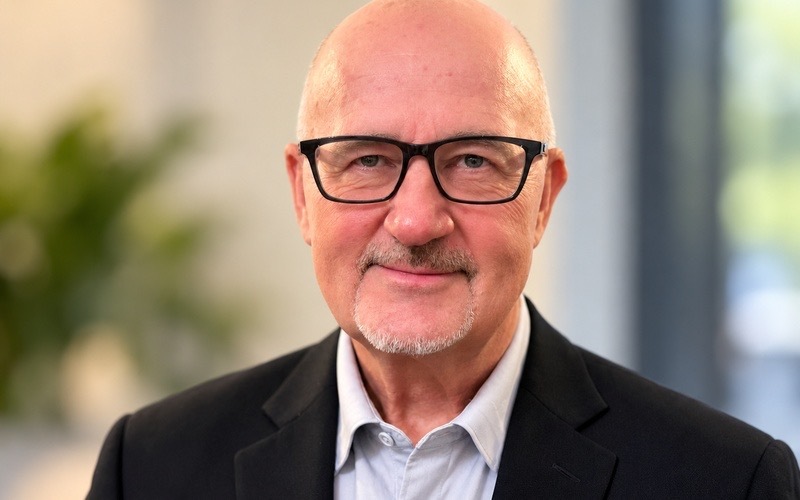
As Commercial Integrator continues its #AVLivingLegends series, we induct Brad Dempsey, retired founder of Solutions360, among the esteemed ranks.
Prior to retirement, Dempsey founded Solutions360 in 1988, where he worked with integration industry leaders to help them better understand project management, business strategy and operations through Solutions360’s business software. He also led the company through the strategic growth investment by Northrim Horizon, an Arizona-based permanent capital investment firm.
In this interview, Dempsey shares his journey at Solutions360, right from developing the Q360 platform to ushering in new CEO Nate Gardner. He also recounts the rewarding experience of frequently attending NSCA’s Business Leadership Conference (BLC) and the camaraderie he discovered during the event.
Read on to learn more about Brad Dempsey, our latest #AVLivingLegends inductee! You can also check out our hub page for past honorees in the series.

Interview with Brad Dempsey
Commercial Integrator: What motivated you to join the commercial AV industry?
Brad Dempsey: I’m not sure I ever made a conscious decision to join the AV industry. Like a lot of people who have spent their careers in this business, I found my way to it somewhat accidentally.
I started Solutions360 in 1988, really as an attempt to solve problems I was experiencing in my own business through automation. I’ve always been fascinated by the intersection of technology and business: not technology for technology’s sake but, rather, how you can use it to make a business work better.
As we worked with more companies, we discovered that technology integrators had a particularly interesting problem. They were project businesses, service businesses, sales organizations and contractors all rolled into one. Yet most of the software available to them was designed for somebody else.
That was an interesting problem to solve, and it eventually became our focus. The deeper I got into the integration industry, the more I liked it. It was entrepreneurial, constantly changing and full of people who were willing to share what they had learned.
I suppose I came into the AV industry through software, but I stayed because of the business and the people.
CI: What kept you motivated and engaged in the decades that followed?
Dempsey: Curiosity has, more than anything else.
I’ve never been very good at accepting, “That’s just the way we do it” as an answer. I want to understand why something works, why it doesn’t work and whether there is a better way.
The integration industry gave me an endless supply of those problems.
As integrators grew, their challenges changed. It wasn’t enough to be technically excellent anymore. You had to understand project management, labor utilization, cash flow, recurring revenue, forecasting, organizational structure and dozens of other things that determine whether a technically successful company is also a financially successful one.
That became increasingly interesting to me.
Over time, I probably became as interested in the business of integration as I was in the software we built to manage it. I’ve had the opportunity to sit down with hundreds of integration companies and look under the hood of their businesses. You begin to see patterns — what successful companies consistently do well and, just as importantly, the mistakes that companies repeatedly make.
Even today, after nearly four decades, there are still new problems to solve. AI and automation are once again going to change how businesses operate. That makes me feel much more curious about what comes next than nostalgic about what came before.
CI: Reflect on your role as both a mentee early in your career and as a mentor later in your career. Who helped shape the trajectory of your professional life? How have you tried to help shape others’ careers?
Dempsey: One of the things I learned fairly early is that you don’t have to learn everything the hard way. There are an awful lot of smart people who have already made the mistakes you are about to make. If you’re willing to listen, they’ll often save you some pain.
I was incredibly fortunate throughout my career to work closely with CFOs, owners, COOs and other industry professionals who were remarkably generous with their knowledge. They were willing to share not only their successes but also the things that didn’t work. And in many ways, I learned more from those latter conversations.
Later in my career, I found myself on the other side of those conversations.
Brad Dempsey on Working with Younger Leaders
I’ve always enjoyed working with younger leaders and entrepreneurs, but I don’t think mentoring means telling someone what to do. Usually, it means helping them ask better questions. What problem are you really trying to solve? What does the data tell you? What are you assuming? What happens if you’re wrong?
I’ve also tried to share what I’ve learned outside Solutions360. Speaking at industry events, participating in peer groups and working with organizations like NSCA gave me the opportunity to talk openly about finance, operations, project management and business strategy.
There shouldn’t be too many secrets about how to run a good business. Our industry gets stronger when successful people are willing to explain what worked — and what didn’t work.
CI: What’s the most memorable story/anecdote of your career in commercial AV?
Dempsey: One of my most memorable experiences was attending my first NSCA Business & Leadership Conference (BLC).
By that point, I had been to plenty of trade shows, conferences and courses, but BLC was something genuinely different. What struck me first was the camaraderie and the relationships I saw all around me. Many of these people were competitors, yet there was a genuine respect for one another and an understanding that they were all facing many of the same challenges.
A recurring sentiment was that “A rising tide lifts all boats.” That really seemed to capture the culture of the event. People were remarkably willing to share their experiences, ideas and even their mistakes if it could help someone else succeed.
The quality of the speakers and the messages they delivered was also unlike anything I had experienced at an industry event before.
I left that first BLC feeling energized and optimistic, believing, perhaps for the first time, that I wasn’t simply working with an industry — I had become part of a community.
CI: What has been your greatest professional accomplishment?
Dempsey: The obvious answer would probably be building Solutions360 and Q360.
What started in 1988 as an effort to automate my own business eventually became a platform used by hundreds of integration companies. I’m enormously proud of that.
But the older I get, the less that I think the accomplishment is the software. The accomplishment is the organization and the people around it.
Brad Dempsey: ‘Extraordinarily Talented People Helped Build Solutions360’
Some extraordinarily talented people chose to spend a significant part of their careers helping build Solutions360. Customers trusted us with systems that effectively run their companies. Many of those customers and industry colleagues became friends.
And eventually, we were able to build something that could continue beyond me.
The strategic investment in Solutions360 and my transition from CEO to founder and CTO was an important milestone for that reason. A founder can build a successful company. Building one that doesn’t need the founder to remain at the center of everything is much harder.
I think I’m most proud of the fact that Solutions360 has reached that point and that its best years may still be ahead of it.
CI: What has been your biggest professional regret?
Dempsey: I probably held onto things too long.
Entrepreneurs have a tendency to believe that because they can do something, they should do it. That’s useful when you’re starting a company. It becomes a liability when you’re trying to build a larger one.
There were times when I should have delegated sooner, hired ahead of the need or simply gotten out of somebody else’s way.
I’ve also learned that delaying a difficult decision rarely makes it easier. Whether it involves a person, a customer, a product or a strategy, when you know something isn’t working, waiting another six months usually just makes the eventual decision more expensive.
Having said that, I don’t spend much time regretting mistakes. I’ve made lots of them. And some were expensive. But almost every important lesson I’ve learned in business came from getting something wrong first.
Failure is an extraordinarily good teacher if you’re willing to admit that you failed.
CI: What’s the best advice or pearl of wisdom you either received during your career or came to realize on your own?
Dempsey: Create systems and processes that allow ordinary people to produce extraordinary results.
I’ve spent most of my career looking at businesses. Over time, one thing becomes very clear: You cannot scale a company by depending on heroes.
Every young company has them: the salesperson who knows every customer, the project manager who can rescue every troubled project, the accountant who knows how everything really works. They are incredibly valuable people, but if the business only works because those people perform miracles every day, you haven’t really built a business. Instead, you’ve built a dependency.
Good businesses turn knowledge into processes. They measure what matters. They give people the information they need to make good decisions. And they continually improve the system rather than blaming the people who are operating inside it.
I would add one other piece of advice: Embrace failure.
If you’re never failing, you’re probably not trying very many new things. The objective isn’t to avoid failure; instead, it’s to fail intelligently, learn quickly and make sure you don’t keep paying tuition for the same lesson.
Looking back, some of the things I got wrong taught me far more than the things I got right.
Would you like to nominate a peer or colleague — or perhaps yourself! — to be featured in this #AVLivingLegends series just like Brad Dempsey was? If so, just email Dan Ferrisi, group editor, commercial and security, Forge.