I can still remember the anxiety at my first client meeting in 2008 — I was new to technology sales, transitioning onto a “tough” account, and by far the most junior, inexperienced and least technical person on the team.
What I didn’t know yet was that the instincts driving my anxiety would actually make me good at this.
At the meeting, we were about to proudly show the client how much we’d expanded their team with the first of many new shiny organization charts. More specialists meant more coverage to us. However, to them, it meant more people to chase on an account.
I could hear them saying this even though the words weren’t coming out that way. However, it seemed no one else could, so I set out to be their advocate.

While I didn’t have the credentials everyone bowed to, I could be the translator on the front line. I had a good read on people, on what they meant underneath their words and on where trust was falling apart before others took notice.
It took me embarrassingly long to understand what that was actually worth.
Are Soft Skills Actually Soft?
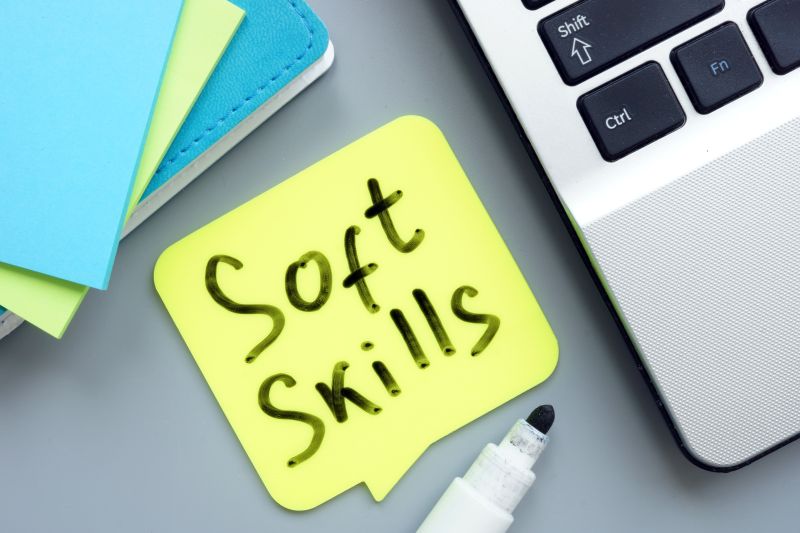
We called these instincts “soft skills,” which has done real damage, because there’s nothing soft about them. They’re durable, adaptive and far harder to fake or automate than we ever gave them credit for.
Reading a room, holding a relationship together through a bad quarter, hearing the real question underneath the polite one — none of that is a trait you were lucky enough to be born with. It’s an irreplaceable discipline that most of us do all day.
As I moved into partnerships, the game got harder. While one tense room is a single relationship, partnerships are an entire ecosystem of them. It pulls in different directions, across manufacturers, designers, contractors, architects, the customer and your own team, and the hard part is holding it together when every party has a different incentive.
I’ve sat in rooms where a partnership was fraying in real time, with everyone still polite while the trust fizzled out.
According to a colleague, I was the person he wanted in that room because I could feel it happening before anyone else could.
Why the Best Skills are Invisible
It is often said that the best technology in this industry is invisible. Nobody notices the AV system, they just notice the meeting went smoothly. Nobody notices the network, they just notice the room worked the way it was supposed to.
This work is the same, and I think that’s exactly why it got dismissed as soft for so long. When it’s done well, nobody in the room ever finds out how close things came to falling apart. All they know is the deal closed, the relationship held and the project shipped on time.
AI and Soft Skills
That’s why I’m not panicking about what AI is going to do to this industry.
For decades, the robotics field assumed the hard problems would be chess and math, and the easy ones would be picking up an egg without crushing it. It went the other way.
The instinctive, human stuff turned out to be hardest to build and reproduce, and pure logic turned out to be easy by comparison.
That’s not a knock on technical skills. Technical skill will always matter, and it’s only getting more powerful with AI in the mix.
However, we’ve spent years calling soft skills like it was a polite way of saying lesser, and we had the framing wrong.
For instance, in any wall, the bricks and the mortar are both load bearing, and neither stands without the other. The mortar starts soft, because its job is to fill every gap, but it carries just as much weight as the bricks once it sets.
What AI is really doing, if we let it, is finally making that shared weight visible.
Being Human on Purpose
For years, people like me did the work of becoming technically fluent, too, learning enough to hold our own in rooms built for specialists.
The invitation now runs in the other direction. Pairing deep technical expertise with more difficult emotional intelligence is what cannot be automated.
2026 is a good year to start building that pairing on purpose. If your instinct has always been to read the room before the spec sheet, now is the time to stop apologizing for it.
Or if you’re wondering where you land and whether you have these “soft” skills, don’t look at your resume, look at your relationships. Notice who calls you for advice, who wants your read before a move and who trusts you with the thing they’d never put in an email. That’s the tell.
And if you want more of that in your life, the fastest way isn’t waiting to be on the receiving end of it; it is becoming that person for someone else first.
This is the year to achieve the skill of being human on purpose.
Heather Long has spent almost two decades betting that the human side of technology would matter as much as the technical.