Each year, Commercial Integrator, Security Sales & Integration and NSCA partner to recognize an integration firm that has raised the bar for its clients, its people and the industry at large. This year’s honoree checks every box.
In just three years, this company transformed a collection of legacy security organizations into one of the nation’s largest commercial security integrators, all while keeping the customer experience at the center of every decision.
For these reasons and many more, we’re proud to name Everon as CI, SSI and NSCA’s 2026 Integrator of the Year.
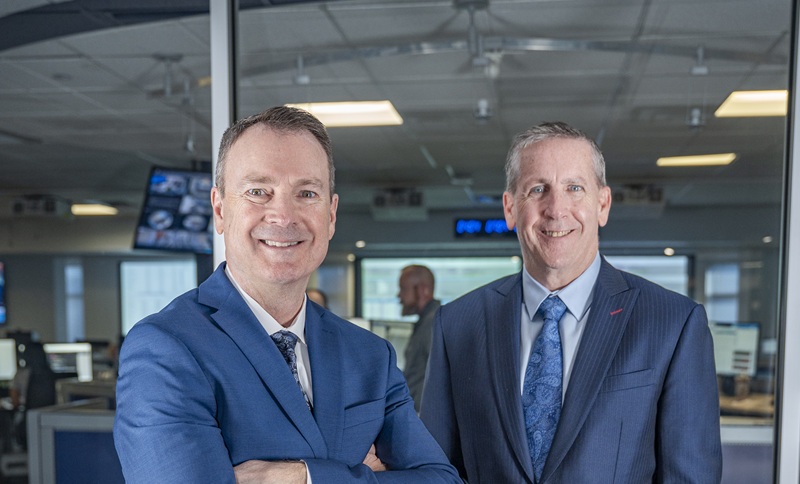
In this feature, we sit down with company leaders Tim Whall, Don Young, Jay Robertson, Mike McWilliams and Bobby Dale to explore the journey of Everon as a major player in the integration industry.

From Legacy to Independence
According to Tim Whall, executive chairman of Everon’s Board of Directors, the company’s journey as an independent organization began in 2023, following ADT’s divestiture of its commercial division, ADT Commercial.
He notes that the company was built on the foundation of several highly respected organizations, including Protection One and Red Hawk Fire & Security, into a single national platform.
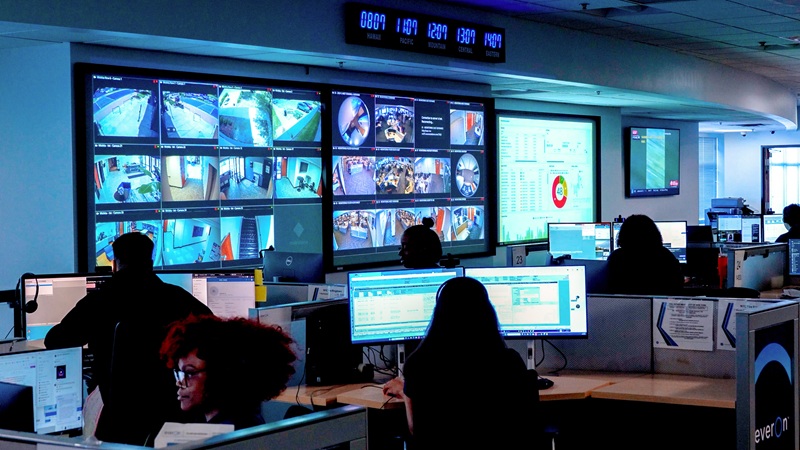
That platform now supports more than 300,000 customer locations through a nationwide network of more than 100 branches, 5,000-plus employees and two company-owned, U.S.-based, UL-listed monitoring centers.
Reflecting on the transformation, Whall notes, “We were creating a brand that virtually no one knew about 36 months ago.”
For him, the biggest challenge was building the culture that eventually would be termed as “One Everon” which united teams around a common go-to-market strategy, leveraged the strengths of the combined organizations and delivered a clear, consistent value proposition to customers nationwide.
As Everon prepared to operate independently, Whall believed strong leadership would be critical to the company’s success — and appointing Don Young as CEO was, in his view, a natural choice.
“Don and I share a history that goes back to 1992, when we started working together,” Whall explains. “Over the years, I’ve seen firsthand the kind of leader he is, so when the opportunity arose, I was glad to convince him to come lead the organization as CEO.”
Praising Young’s leadership skills, Whall remarks, “The comfort level and confidence that I have with Don is unwavering. I’ve met a lot of great executives over my tenure, and Don is certainly among the very best.”
He adds that he has full faith in Young’s capabilities in running the company, adding that their long history and mutual trust have allowed them to operate with a shared focus on what matters most.
“We have a strong partnership built on respect, trust and a commitment to doing what’s best for the company,” says Whall. “We each play different roles, but we’re aligned in our goal of helping Everon reach its full potential.”
Young, too, expresses his excitement about the partnership with Whall. “Tim and I have worked together for decades, and that history is built on a foundation of trust, shared values and a common view of what great organizations can achieve,” he states. “When the opportunity to help build Everon presented itself, it felt like a natural next chapter, and I could not be more energized about what we are creating together.”
Building the Everon Infrastructure
According to Young, the decision to build new platforms during the separation from ADT stemmed from necessity. “The separation presented us with a unique opportunity to design our future from the ground up,” he reveals. “Rather than simply replicating the legacy systems, we built a modern, commercial-focused foundation specifically designed to support growth, agility and long-term customer success.”
Jay Robertson, chief business operations officer, chimes in, noting that the transition required building infrastructure at a massive scale.
“Within its first year of separating from ADT, Everon successfully set up entirely new corporate systems, including a telephony system, HR platform, sales commissioning platform and financial platform,” he says. “We also managed the significant organizational change required to implement these systems across the company. Our ability to accomplish all of this in such a short time has been nothing short of remarkable.”
For Young, these investments weren’t just about keeping the lights on; rather, they laid down the foundation for what comes next.
“The investments we made during the separation created a modern data architecture that positions us to unlock the full potential of AI,” he states. “Today, we are applying those capabilities both within our operations and across customer environments to improve efficiency, strengthen decision-making and deliver better outcomes.”
A Culture of Accountability
Ask anyone at Everon what drives the business, and the answer is the same: the customer. Whall calls it the “true north” of the company as it shapes how Everon measures success. Rather than leading with revenue targets, the company focuses on the inputs that produce great outcomes.
For instance, Everon established a comprehensive operating framework built around daily scorecards, Monthly Operating Reviews (MORs), Blue Box reporting and Total Cost of Ownership (TCO) analytics, giving leaders real-time visibility into the operational metrics most closely tied to customer experience, service performance, productivity, retention and profitability.
Courtesy / Chandler Hawkins, Everon
This new operating model has fundamentally changed how decisions are made throughout the organization and created a culture of accountability and continuous improvement across more than 100 branch locations nationwide.
“The ‘Blue Box’ is just a term we’re using in this particular company…. It’s measuring the inputs that will drive the outputs we want,” explains Whall. “If you sit there at the top, and you say the goal is X amount of profit and X amount of revenue, it tells me what you want, but it doesn’t tell me how to get there.”
Instead, Everon focuses on the “how” and it holds every role accountable to the same high standards. “Don’t tell the employees the results you expect. Tell them how to get it done,” emphasizes Whall. “When you share with an employee the how and what success looks like…then it’s just a matter of will and skill.”
According to Mike McWilliams, president and COO, accountability also means being honest with customers, even when the numbers aren’t flattering.
As an example, he points to a quarterly business review with a major grocery store chain earlier this year where they shared something that left a lasting impression. “They remarked, ‘You’re the only company we work with that presents everything — the good, the bad, everything,’” he narrates. “‘You bring the truth document and show us exactly how you’re performing.’”
Combined with daily and monthly reviews, the framework has fundamentally changed the way the business operates, shifting Everon from a more reactive management structure to proactive performance improvement while ensuring accountability across a nationwide footprint.
In fact, the company holds itself accountable to an 85% first-day resolution rate where it offers same- or next-day service within 60 miles of a branch and has cut its monitoring center’s average speed-to-answer to roughly six seconds.
Behind these metrics is a mindset that no interaction is someone else’s problem.
“One of the defining characteristics of our culture is a deep sense of ownership. We expect every employee to take responsibility for the customer experience, regardless of title, function or organizational boundaries,” says Young. “That commitment to accountability and service is one of the most meaningful differentiators of the Everon brand.”
Investing in People
For Everon, taking care of customers starts with taking care of employees. The company has poured resources into training its frontline teams and its managers alike.
“Over the last 12 months, Everon has trained more than 450 managers and supervisors on core company values and operational priorities,” McWilliams says, pointing to the scale of the effort.
This commitment also shows up in how the company fills its leadership roles. “Out of the last 10 general managers promoted to lead district offices, eight were internal promotions,” he adds, underscoring the depth of Everon’s investment in nurturing its own talent.
The investment also extends to career growth for younger employees. In fact, Everon runs a U.S. Department of Labor-accredited technician apprenticeship program that provides up to 6,000 hours of structured, on-the-job training.
Additionally, more than 2,300 technicians receive ongoing technical education and industry certifications, including NICET, NFPA and OSHA.
“As I look across our organization, [I am proud to] see all these hardworking, courageous people gaining experience, stepping into larger roles, taking on greater responsibility and having a sense of ownership of the company because they’ve [become] part of the fabric,” remarks McWilliams.
Recognition is woven into the culture as well. According to Bobby Dale, chief customer officer, recognition is actually an active pursuit of catching somebody doing something right.
“When that happens — and it happens a lot — we are very quick to recognize honestly and truly recognize performance no matter the role,” he emphasizes. “If you don’t have that sense within your culture of recognizing people and doing it in a more natural way, you’re never going to be able to have an organization where the pride and passion come through.”
Commitment to Customers and Partners
Young underscores that Everon’s vendor-agnostic model sets it apart in a crowded field.
He explains that as a service business, the company isn’t tied to any single manufacturer which frees it to recommend the right solution for each client.
“Our vendor-agnostic approach allows us to remain focused on what matters most: solving customer challenges,” remarks Young. “We begin with the customer’s objectives and design solutions around their needs, rather than leading with a predetermined product or technology.”
For McWilliams, another strength of the company lies in its ability to listen to clients. He declares that Everon operates on a “diagnose before you prescribe” model. “The company [works] closely with clients to understand their specific operational pain points before recommending a customized solution,” explains McWilliams.
That partnership mindset extends to Everon’s vendor relationships as well.
According to Dale, Everon treats its technology manufacturers as true partners where the opportunity is not to “push them around as much as it’s an opportunity to join hands and understand each other.”
Robertson chimes in, stating that Everon often works with partners on their product roadmap and shares with them the features that the company itself would like to see or that customers would like to see. “I think that helps us to…let the customers know that we’re forward thinking and that we’re always trying to drive more innovation and more value for them,” he says.
When asked to recollect overall customer sentiments, all interviewees emphasize the positive feedback at GSX 2026.
Young recounts the experience, stating, “At GSX, I actively sought constructive criticism from customers, and what stood out was how consistently positive the feedback was. It served as a powerful validation of the progress our team has made over the past three years.”
For Whall, this customer-first equation always adds up. He says, “We’ve always led with the customer experience at every one of these companies because if the customer experience is the best in class, the employees have a sense of pride of working for that organization.”
From his perspective, when employees feel this level of pride, they are more likely to give their best, discretionary effort. “And when that happens, the numbers always follow,” says Whall.
Localized Services, National Impact
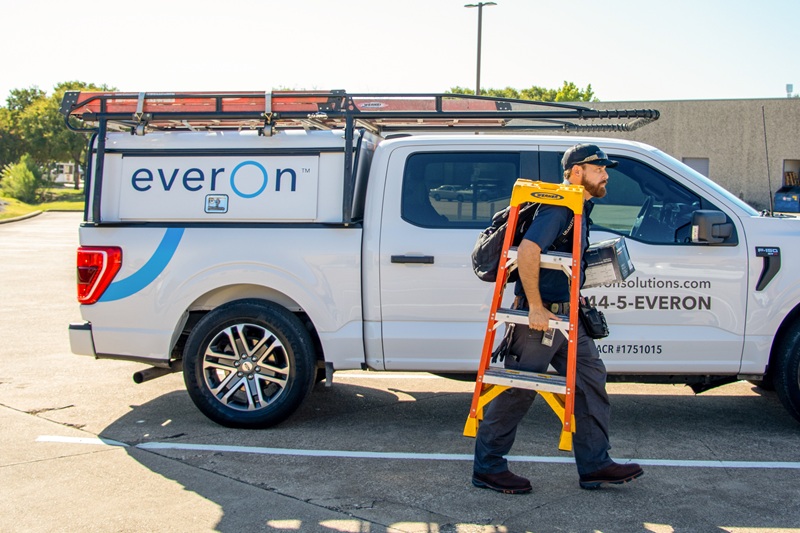
Everon aims to deliver this world-class experience across its portfolio, whether a customer is a single location or a 17,000-store national account.
As McWilliams explains, “We really want to make sure that all customers — whether it’s one of our big national account customers, a local customer or an enterprise customer — get the same experience.”
Courtesy / Chandler Hawkins, Everon
Robertson likens this goal to a premier franchise model such as Chick-fil-A where each branch receives identical, top-notch services regardless of geography and size. He explains that the company’s data-driven strategy is grounded in “the idea and the promise of delivering consistently excellent service, no matter where you are in the country.”
Taking on a Proactive Stance
Everon isn’t standing still. The company sees its next chapter in shifting from reactive service to proactive protection, powered by the data platforms it built during the separation and the practical application of AI as a force multiplier for its people.
“The next horizon is defined by helping customers move from a reactive operating model to a proactive one,” says Young. “By combining data, analytics, AI and deep industry expertise, we can help organizations anticipate issues, mitigate risk and improve outcomes before problems occur.” It’s a natural extension of a company that already invests heavily in its systems and people. For Everon, AI is a tool to accelerate human expertise to better serve the company, not replace its talent.
“Our CIO, Ryan Fritts, and our technology team have established a disciplined, business-focused approach to AI adoption,” he reveals. “We are not pursuing AI for its own sake. Every deployment is evaluated through the lens of measurable value for our customers, our employees and our business, ensuring that innovation is practical, responsible and outcome-driven.”
Meanwhile, for Whall, being proactive is less about reacting quickly and more about creating the conditions for success before challenges arise. “Being proactive [can be] difficult,” he explains. “It sounds easy, but you’ve got to try and create [an] intentional space and have a vision.”
Here the vision lies in solidifying the Everon name. As Whall puts it, “We created the name out of nothing and we [continue] to make that become something.”
Everon on Giving Back
Through its nationwide Be the Difference program, Everon employees contribute thousands of volunteer hours and significant charitable support annually to causes including food security, children’s services, family support programs, homelessness initiatives, housing assistance efforts and veteran support organizations.
Since 2022, employees have contributed more than 9,100 volunteer hours, generated more than $120,000 in charitable giving and participated in hundreds of community projects across the country.
These efforts reflect a belief that great companies should serve not only their customers but also the communities where they live and work.
Everon Launches Active Video Monitoring Services
As customer expectations evolved beyond traditional system installation, Everon has invested thoughtfully in AI, advanced analytics, automation, cloud-based platforms and remote services designed to improve outcomes throughout the customer lifecycle.
This includes the launch of Active Video Monitoring (AVM), an innovative service that combines advanced analytics, live monitoring expertise and real-time intervention to help prevent incidents before they occur.
Unlike traditional alarm response models, AVM moves customers toward a proactive risk management approach that improves visibility, reduces false dispatches and enhances overall security effectiveness.
Early customer adoption has already demonstrated measurable reductions in theft, trespassing and after-hours incidents.
The Story of Everon

Courtesy / NSCA
For Dale, Everon’s story resonates because it is rooted in authenticity, not hype. “As an organization that is intent is to be the best, you have to really have a story of who you are, what you are and it can’t be an empty story,” he says. “To get prospective customers or existing customers to grow with you, it has to be real.”
This authenticity, he argues, comes from knowing exactly what the company can deliver and empowering its people to bring that promise to life.
“We’re honest about what we can do. We don’t try to stretch ourselves into conversations about what we might be able to deliver. It’s what we know we can do,” emphasizes Dale. “It’s not just about words; it’s in our actions every day and who we are as a company.”
And that’s exactly what has earned Everon our 2026 Integrator of the Year top honors.
In three short years, the company built a national brand that is invested deeply in its people and that has never lost sight of the customer.
The industry is watching, and the future looks bright.