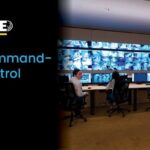

At Walmart’s Sam Walton Hall Event Center in Bentonville, the brief extended far beyond a single auditorium. Its conference center, broadcast and radio studios, auxiliary control rooms and outdoor amphitheater needed to operate as one interconnected live production environment.
Content had to move between venues and reach audiences far beyond the campus. Operators needed control from multiple locations, with the entire system remaining within the company’s enterprise IT and security requirements.
This project shows how broadcast AV is changing the integrator’s brief.
Clients outside traditional broadcasting are producing more live content and expecting reliable output that can be repeated without demanding specialist operation.

How Can Integrators Adapt Their Brief for Broadcast AV?
Integrators need to scope production as part of the wider environment from the start, rather than bolt a specialized broadcast layer onto an otherwise conventional AV design.
To achieve this, they need to focus on the following steps.
Start With Customers’ Needs
A room specification can describe signal paths and endpoints perfectly and still miss the production.
For a campus project of this kind, the more revealing questions are operational: Which spaces could originate a program? Could two events run at once? Where might control move during an event? Where does each feed need to go: an internal platform, an overflow space, a recording or an archive?
Following the content exposes requirements that a bill of materials cannot. A recurring town hall may be run by a communications team using approved templates, while a leadership event brings in experienced operators who need deeper control.
The same facility has to serve both without creating two separate systems or forcing occasional users to think like broadcast engineers.
It also makes failure tolerance a commercial question. If a network path or control position becomes unavailable, must the event continue? Who sees the alarm, and who owns the recovery?
The answers shape redundancy, staffing, support and price. If they surface during commissioning, the project is already carrying unpriced risk.
Understand Simplicity and its Hidden Requirement
Enterprise clients rightly want simple operation. For a familiar event, that may mean choosing a template and starting the program.
Yet, the simplicity visible to the user depends on sophistication behind the interface. Support teams still need to see source availability, signal status, audio levels, timing, stream health and the path currently on air.
This is why control should be designed by role, rather than forcing everyone to use the same interface.
Occasional users need guided operation. The teams supporting the production need deeper control and the ability to diagnose or override the system.
A workflow can be easy to use without becoming a black box, but only if observability and recovery are treated as part of the user experience.
To ensure a technically capable studio also fits naturally into the organization around it, integrators need to involve the right stakeholders early.
Production teams can define how content needs to move, while IT teams can shape decisions around security and shared infrastructure.
Bringing those requirements together at the initial design stage helps create a production environment that works operationally as well as technically.
Test Interoperability Before Finalizing Control
An API checkbox does not guarantee that systems will operate together.
Integrators need to establish which functions an external control layer can command and which status information it can read back. They must also understand how the integration is authenticated and licensed. Software updates should not be allowed to disrupt a live workflow without warning.
An integration that can trigger an action but cannot confirm its state may be inadequate for live production.
IP production also brings broadcast requirements into direct contact with enterprise network policy, timing, multicast traffic, device discovery, bandwidth allocation and network segmentation need to be agreed with IT early.
Responsibility for monitoring and fault resolution also need to be clear, and integrators should be asking what remains controllable if the orchestration layer or a network service becomes unavailable.
These capabilities should be proven against the intended workflow rather than checked only against a device list. A lab test or early proof of concept can expose limitations before the project design and commercial model are finalized.
Build for the final 20%
Many broadcast AV projects share a repeatable core: source acquisition, switching, graphics, audio, routing, recording, distribution and monitoring.
The difference often lies in the final 20%. This may include an established presentation platform, an accessibility requirement, a distribution policy or an approval process unique to the organization.
Those details determine whether the system becomes part of daily operations or remains difficult to use.
Software-defined production makes it easier to accommodate that variation. Where the architecture and IT policy permit, services can run on shared compute and be adapted as requirements develop, while specialized hardware remains in place where the workflow demands it.
The integrator can standardize the core architecture without forcing every client into the same operating model.
That flexibility becomes increasingly valuable over the life of the facility. A space designed for one type of internal event may later need to support additional outputs or a larger remote audience.
If the production environment has sufficient headroom and can be adjusted in software, the integrator can respond without redesigning the core infrastructure each time the brief changes.
Turn the Workflow Into a Repeatable Service
For integrators, the opportunity is to build a repeatable method for scoping and designing live workflows, not simply add broadcast products to an AV catalog.
Packaging that expertise around corporate studios or hybrid teaching spaces makes the value easier to understand. A repeatable method is not one-size-fits-all.
Integrators can standardize discovery questions, design principles, testing and documentation, then adapt the workflow. Applying that method reduces delivery risk and helps integrators recognize when a conventional AV brief has become a live media requirement.
Vertical knowledge remains important because a corporate studio will operate differently from a house of worship or university sports environment.
The underlying production requirements may remain consistent, but the proposition must reflect the workflow and support expectations of that market.
This approach also creates an opportunity beyond the initial installation.
Production needs will evolve as more teams use the facility and new distribution requirements emerge. Software-based adaptation and ongoing support allow the integrator to remain involved as the client’s use of video matures.
Broadcast AV: An Opportunity for Integrators
Broadcast AV is therefore less a product category; rather, it is an expansion of the integrator’s brief.
Moreover, clients are buying operational confidence, thus creating an opportunity for integrators to become trusted partners that keep live production dependable.
Jonathan Lyth is product director, Enterprise Media, Grass Valley.