
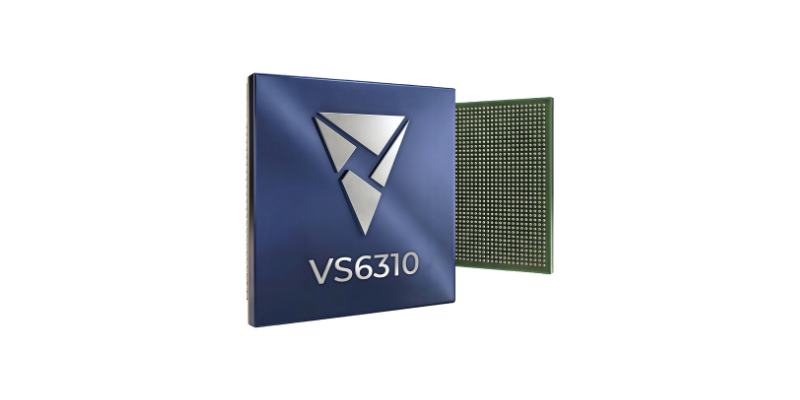
Videoconferencing rooms rely on more USB devices than ever, and those devices rarely sit next to the codec or room PC. Integrators often bridge that gap with external extender boxes. Valens Semiconductor wants to move that extension inside the devices themselves.
The Israel-based company (NYSE: VLN) announced the VS6310, a low-power USB3 extension chipset that manufacturers can embed in conference room peripherals.
Key Things to Know
- Valens Semiconductor’s new VS6310 chipset lets manufacturers build USB3 extension directly into e/PTZ cameras, touch controllers, active cables and other conference room peripherals.
- The chipset typically draws less than 1 watt, which suits small embedded designs.
- It extends USB3 at up to 2.5 Gbps over standard Category cable for up to 40 meters.
- The VS6310 complies with the HDBaseT-USB3 standard and works with Valens’ existing VS6320.
- Samples ship in mid-November 2026, and mass production starts in January 2027.
What Is the VS6310 Chipset?
The VS6310 is a USB3 extension chipset that hardware makers can integrate directly into videoconferencing peripherals. Valens designed it for e/PTZ cameras, touch controllers, active cables and other small devices used in meeting spaces.
The chipset builds on Valens’ VS6320. Its main difference is lower power consumption, which makes it a better fit for compact embedded designs.

Why Does Embedded USB3 Extension Matter for Conference Rooms?
Embedded USB3 extension matters because it can remove separate extender boxes from the signal path. Today’s videoconferencing systems use high-quality cameras and other USB peripherals spread throughout the room. Each long run often requires its own extender hardware.
When the extension lives inside the peripheral, a room needs fewer components to install and connect. According to Valens, that results in simpler setups.
“The VS6310 opens new opportunities for our customers to integrate USB3 extension directly into their products,” says Gili Friedman, head of audio-video business at Valens Semiconductor. “Its lower power consumption makes it suited for embedded designs, helping manufacturers reduce the need for external extender boxes and deliver simpler, cleaner video conferencing setups.”
How Much Power Does the VS6310 Use?
The VS6310 typically consumes less than 1 watt. Embedded designs face tight power limits, especially in small devices like cameras, touch controllers and active cables.
That low draw is the chipset’s central selling point. It lets manufacturers add USB3 extension to products that couldn’t easily support a higher-power chip.
What Cable and Distance Does the VS6310 Support?
The VS6310 extends USB3 at up to 2.5 Gbps over standard Category cable for distances up to 40 meters. It also carries USB2 at 480 Mbps and control signals over the same cable.
The chipset complies with the HDBaseT-USB3 standard and supports all USB transfer types. For integrators, Category cable support means devices built on the chip can use infrastructure that’s already common in commercial installs.
How Does the VS6310 Differ From the VS6320?
The VS6310 differs from the VS6320 mainly in its lower power consumption. It is ideal for embedded designs that reduce the need for external extender boxes.
The two chipsets are interoperable. Manufacturers can pair them to choose the right mix of bandwidth, reach and power consumption for each peripheral in a system.
What Does the VS6310 Mean for AV Integrators?
The VS6310 could mean fewer standalone extenders in future conference room designs, but integrators won’t see it until manufacturers build it into shipping products. Valens sells chipsets to hardware makers, not directly to integrators.
Valens hasn’t named any manufacturers using the VS6310 yet. Integrators planning room standards for 2027 and beyond should watch for camera, touch panel and active cable makers that list HDBaseT-USB3 support in upcoming product specs.
When Will the VS6310 Be Available?
VS6310 samples will be available in mid-November 2026. Valens has scheduled mass production for January 2027.
Products that use the chipset will depend on each manufacturer’s own development and release timeline.