
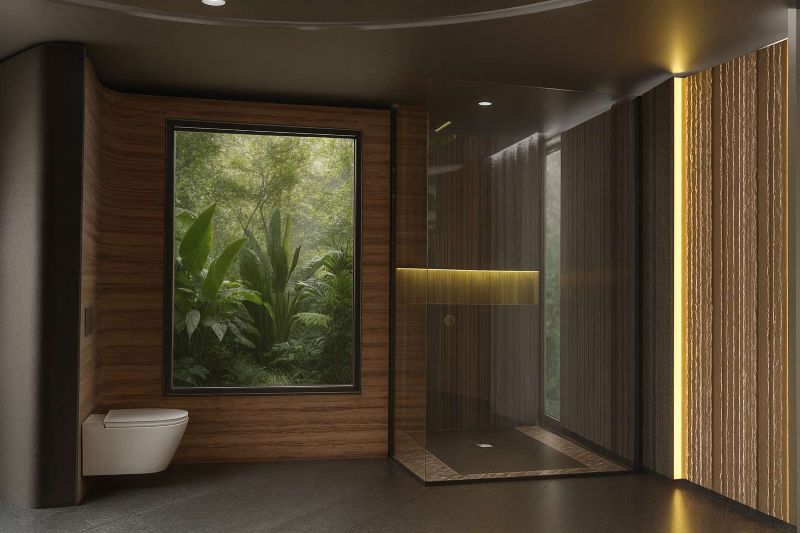
Most product showrooms still rely on the same formula: fixtures on display, a looping video and a rep who explains the rest. That formula breaks down when the product is a connected bathroom, because the value lives in how the systems respond, not in how the fixtures look.
Noken, the bathroom brand of Porcelanosa Grupo, set out to solve that problem with the FLO·W Experience. The project turns a static showroom into a space that reacts to each host and visitor group. For integrators, it’s a working blueprint for how CMS, automation and physical products can run as one system.
What You Need to Know
- nsign Managed Solutions served as the audiovisual integrator for Noken’s FLO·W Experience at Porcelanosa Grupo’s headquarters in Vila-real, Castellón, Spain.
- The nsign CMS handles content and the Loxone platform handles access, lighting, water and other physical systems. The two systems trade triggers so one physical action can fire a full audiovisual scene.
- A network of nsign media players drives ten display endpoints. They include a transparent LED on shower glass, mirror-concealed screens and a curved LED wall.
- Hosts start each visit with a personalized NFC card that sets the language, profile and content sequence.
- The project shows how digital signage now works as a control layer tied to the building, not just a playlist on a screen.
What Is the FLO·W Experience?
Courtesy / nsign
The FLO·W Experience is an interactive showroom inside Noken’s space at Porcelanosa Grupo’s headquarters that demonstrates a connected bathroom through triggered scenes, personalized content and responsive fixtures. The concept centers on “Future Living of Wellness,” which ties together design, wellbeing, sustainability, smart living, connected health and intelligent devices.
The goal wasn’t a better product display. Noken wanted a space that responds to each visit. That meant architecture, audiovisual content, displays, sound, dynamic lighting, sensors, NFC, automation, water, smart mirrors, digital interfaces and AI all had to operate together.
Who Handled the Integration?
nsign Managed Solutions served as the project’s audiovisual technology integrator, supplying and installing the hardware and deploying its CMS to manage and synchronize the digital content layer. The team developed the system with Noken and Loxone, whose platform controls the showroom’s automation and physical systems.
Each party owned a defined lane. Noken led the overall concept, art direction, construction and product integration. Loxone governed the physical response of the room. nsign handled the audiovisual and content layer and kept every display, player and sequence in sync.
That division of labor is the real lesson for multi-vendor jobs. Clear ownership keeps a complex install from turning into a finger-pointing exercise.
Noken credits that coordination directly. “Working with nsign was crucial to coordinating the space’s audiovisual layer and ensuring that imagery, sound, content and personalized interaction operated in sync,” says David Monzón of Noken.
How Does the NFC-Triggered Visitor Journey Work?
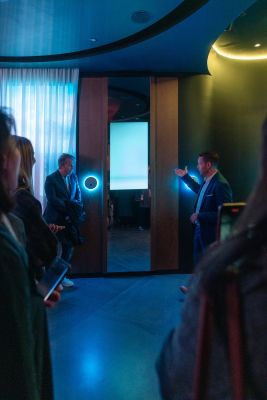
The visitor journey starts when a host taps a personalized NFC card that identifies them and launches a sequence tailored to their profile and language. That single tap triggers a personalized welcome and coordinates content, lighting, sound and other audiovisual elements.
From there, NFC touchpoints, sensors and physical controls activate each stage of the tour. The voiceover plays in the selected language.
The design choice that matters most is what the system leaves out. There are no voice commands and no visible interfaces that would interrupt a group walkthrough. The host leads the demo, and the room responds to their actions.
Courtesy / nsign
How Do the nsign CMS and Loxone Automation Work Together?
The nsign CMS and the Loxone platform split the work: Loxone controls the physical environment, while nsign delivers and synchronizes audiovisual content across every display surface. Loxone runs access, lighting, water and other technical systems. nsign’s media players coordinate video, imagery, sound and digital scenes.
The integration between the two is what makes the room feel alive. A physical action, such as presenting an NFC card, tripping a sensor or selecting a mode on a control, starts a specific audiovisual response. That response might change content, launch a scene, adjust lighting, play an audio cue or shift the overall ambience.
If you’ve ever stitched signage into a control system with workarounds, you know why this matters. A CMS that accepts and responds to third-party events removes a layer of custom glue code from the job.
What Display Hardware Drives the Showroom?
A network of nsign players drives ten display endpoints across the showroom. The mix includes:
- A transparent LED display on the shower glass
- Concealed screens behind two-way mirror glass
- LED displays that act as digital windows
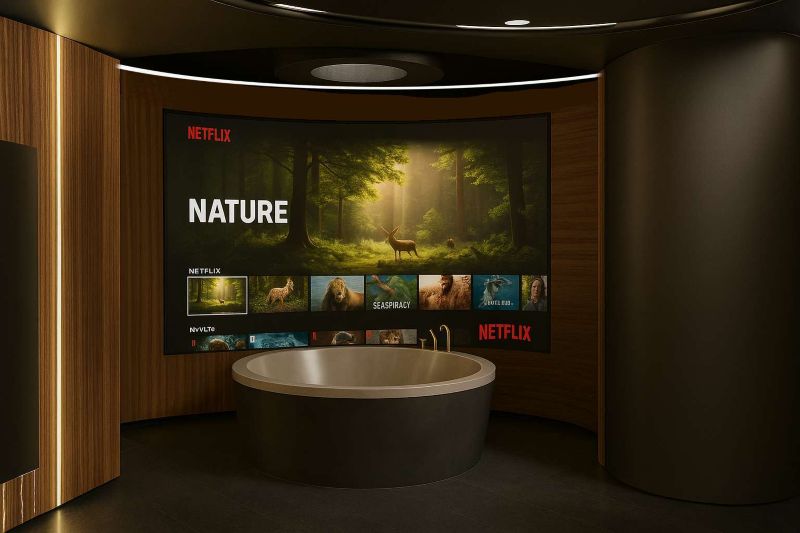
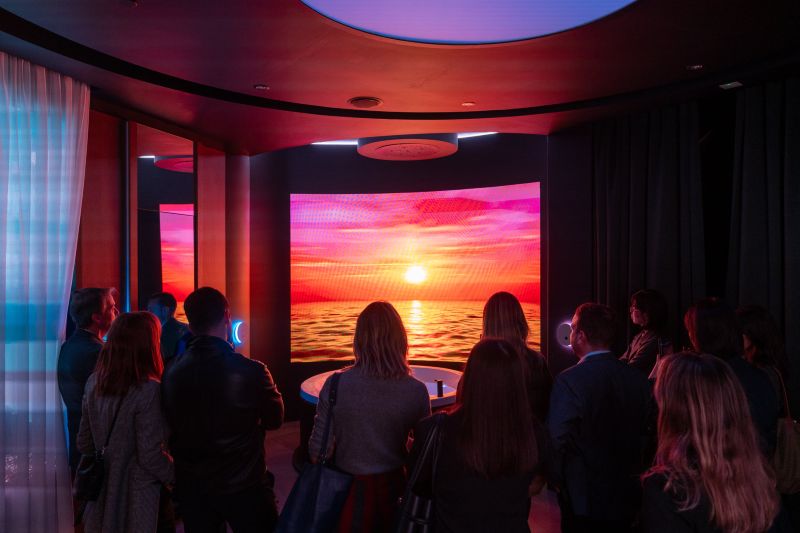
- A large curved LED screen in the bath area
- A 43-inch LCD in the dressing area
- A projector for atmospheric effects
The range of form factors is the point. Few of these screens look like signage, and that’s by design.
Courtesy / nsign
What Happens at the Washbasin?
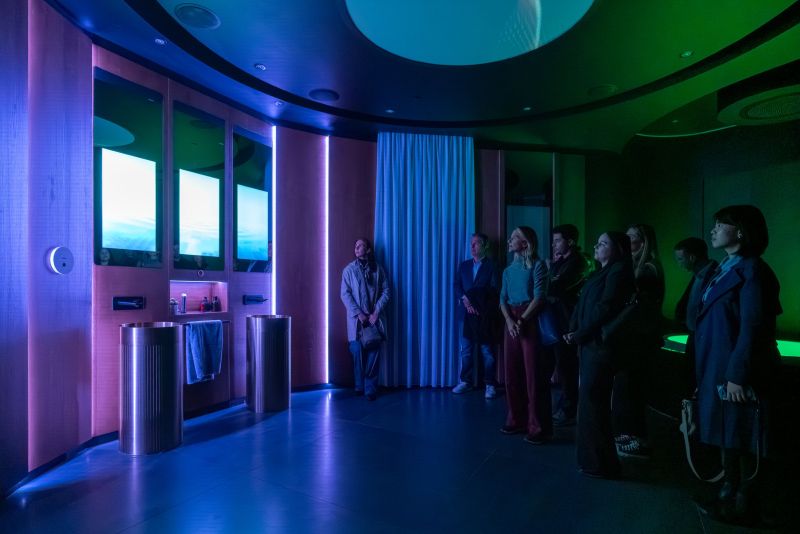
The washbasin area turns mirrors into personal information screens using three 32-inch displays concealed behind two-way mirror glass. The mirrors show calendar entries, music, weather forecasts, sleep scores, heart rate, Body Battery and water-consumption data.
The scene simulates a morning routine. The space supports the user and pulls relevant data into one place to start the day.
On either side, two large-format LED displays act as digital windows. They play content such as sunrise sequences to create a sense of an outdoor view. These aren’t communication screens. They’re architectural elements that change how visitors perceive the room.
How Does the Interactive Shower Work?
The shower uses a transparent, self-adhesive Unilumin LED display applied directly to the glass, which lets the host pick from different operating modes. Options include Eco/Waterforest, Relax and Activation.
Selecting a mode changes both the on-screen content and the physical behavior of the shower. Content and water respond together.
This is where the project crosses a line most signage never reaches. The display stops broadcasting and becomes the control surface for the product itself.
How Does the Project Use AI-Generated Content?
The dressing area uses a 43-inch LCD to present AI-generated content with personalized outfit suggestions for the host. The scene stretches the bathroom concept into a broader smart-living routine, with the space supporting the user at different points in the day.
For integrators, it’s a practical example of AI content running inside a managed signage workflow. It doesn’t require its own platform.
What Makes the Bath Area Immersive?
The bath area relies on a large Absen LED display measuring about 2.5 by 2 meters, installed with a subtle curve to deepen immersion. A Loxone Touch Pure Flex Tree control built into the bath lets the host choose Cinema, Music or Relax modes.
Each mode triggers coordinated content, lighting and ambience. A 5,000-lumen Optoma Full HD projector adds a final layer of atmospheric projection across the space.
Why Did the Team Keep the Technology Hidden?
The team kept the technology hidden because Noken wanted it to support the design and products, not compete with them. The brand’s goal was a more emotional and intuitive vision of the bathroom of the future.
Sergio Soriano, sales director AV at nsign Managed Solutions, describes the gap between what sits behind the walls and what visitors actually touch.
“One of the FLO·W Experience’s main achievements is that visitors never see the technological complexity behind it,” says Soriano. “Behind the experience are specialist displays, media players, sensors, NFC, automation, programming, lighting, sound, HTML interfaces and building control. Yet the interaction remains simple for the user: a zone is activated, the space responds and the story moves forward.”
Monzón points to the same outcome from the client side. “One of the project’s greatest achievements has been keeping all that technological complexity hidden behind an intuitive and emotional experience,” says Monzón. He adds that visitors experience FLO·W as a real demonstration of how design, technology and wellbeing come together, not as a product exhibition.
Courtesy / nsign
Who Is the Showroom Built For?
The showroom serves professional visitors, including architects, interior designers, distributors, hotel groups and foodservice operators. Instead of explaining the smart bathroom through catalogs, standalone videos or isolated demos, Noken lets these visitors see and feel how a connected bathroom works.
That approach makes abstract concepts tangible. Connected health, water efficiency, personalization, wellness, smart devices, building automation and AI become things visitors watch respond in real time.
What Does the Project Mean for Digital Signage?
The project shows digital signage shifting from a content-playback tool into an orchestration layer that responds to events and connects to the building around it. nsign’s CMS integrates with third-party systems, reacts to triggers, runs scenes and makes content an active part of the visitor journey.
Soriano sums up the intent: the experience turns the showroom into “a living environment: a space where technology never takes over, but supports.”
For integrators, the takeaway is that clients won’t just ask which screens to hang. They’ll ask how those screens talk to lighting, water, access and automation. The projects that win will come from teams that can scope the CMS, the control platform and the trigger logic as one system, and that can hide all of it behind an interface simple enough for a sales rep to run with a single card tap.