Key Things to Know
- Mahindra University installed a Renkus-Heinz C Series point source system in the 1,100-seat Dr. APJ Abdul Kalam Auditorium in Hyderabad, India.
- The system includes two CX151B loudspeakers, ten CX61B coaxial loudspeakers and ten DRS18-2B subwoofers.
- Sonics led system design, CMPPL handled integration and Alphatec served as the local Renkus-Heinz distributor.
- Key goals included speech intelligibility, acoustic containment and discreet placement that met architectural requirements.
- Dante and a touch panel with presets manage system control, allowing staff to run the room with minimal training.
- The project met a strict inauguration deadline and now serves as a reference point for future campus AV work.
What Audio Challenges Did the University Face?
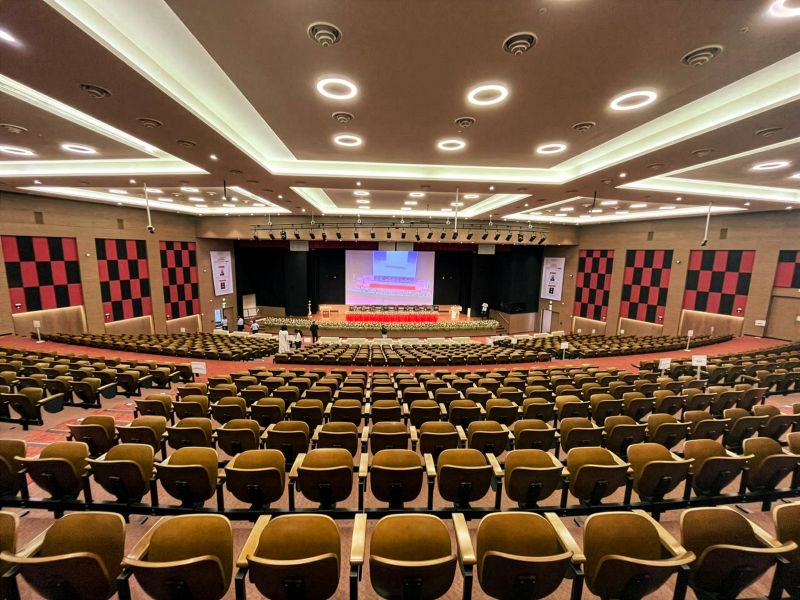
The university needed reliable sound coverage across a large multipurpose room without adding complexity or visual clutter. The Dr. APJ Abdul Kalam Auditorium supports lectures, seminars, musical performances and campus events, so the audio system had to serve both daily teaching and cultural programming. Before the upgrade, voice reinforcement was a recurring problem.
“The large hall required an audio system that delivers strong coverage without adding unnecessary complexity or visual intrusion,” explains Sriram B.R., design director at AV consultancy Sonics. “Before the new system was installed, students had to share microphones during lectures and sessions, so improving voice reinforcement was also an important consideration.”
What System Did Mahindra University Install?
Mahindra University installed a Renkus-Heinz C Series point source system built around two passive CX151B Complex Conic loudspeakers, ten compact passive coaxial CX61B loudspeakers and ten DRS18-2B subwoofers. Together the components form a full-range reinforcement solution that provides even coverage, controlled output and consistent intelligibility across the 1,100-seat space.
The design also included a wider AV infrastructure. That setup covers wireless microphones, a pass-around microphone, mixing, DSP, switching, video systems, screens and cameras to support teaching, presentations and event production. Audio-Technica microphones improved voice capture and audience interaction.

Courtesy / Renkus-Heinz
How Did the Design Address Acoustics and Aesthetics?
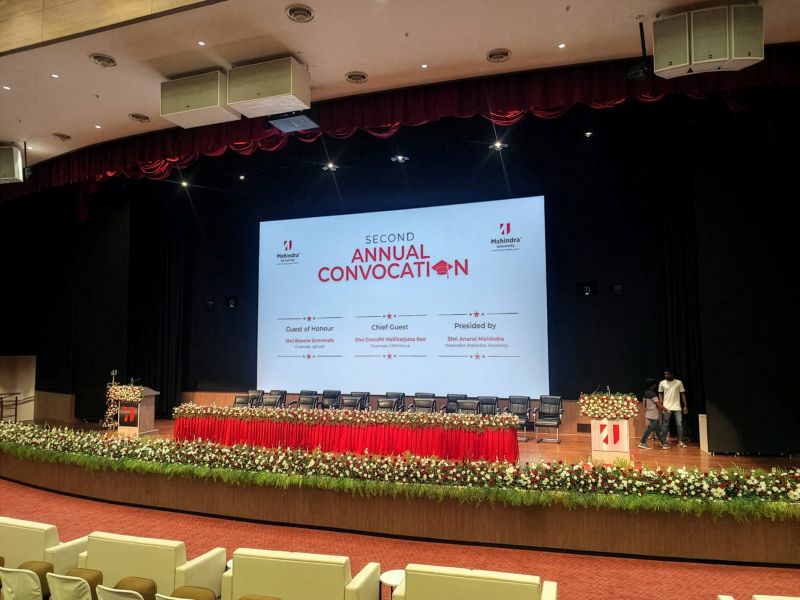
The design team placed loudspeakers around the stage and proscenium to direct sound into the raked seating while keeping the hardware out of sight. The auditorium is an enclosed air-conditioned space with no windows, which made acoustic control a central concern from the start.
“We worked closely with the architects to ensure loudspeaker placement met both acoustic and aesthetic requirements,” Sriram says. “By integrating the system around the stage and proscenium area, with key elements mounted high above the front of the stage, we were able to direct sound precisely into the raked seating area while maintaining clear front-to-back coverage and minimizing visual impact. The compact C Series form factor made this easier.”
Why Was Sound Containment So Important?
Sound containment mattered because the auditorium sits within a busy campus, and audio leaking into surrounding areas would disrupt nearby spaces. The team designed the system to keep audio inside the room.
“It was imperative that the sound stayed within the auditorium to avoid excessive sound spill,” explains Narasa Raju, manager at Tech Mahindra. “The new system ensures every note and every word can be heard clearly within the room, without leaking into surrounding areas of the campus.”
How Do Staff Operate the System?
Staff operate the system through Dante and a touch panel with presets, which allows university personnel to run the room without technical expertise. The interface was built for daily use by non-specialists.
“Only a small amount of training was needed, and staff now benefit from smooth day-to-day operation,” says Raju. “The intuitive system gives us confidence that, whatever the room is being used for, the sound will perform exactly as required.”
How Did the Team Meet the Inauguration Deadline?
The team met a strict deadline by working closely with Renkus-Heinz to resolve issues as they came up. The auditorium had to be fully operational in time for its inauguration, which left little room for delays. Alphatec, the local Renkus-Heinz distributor, supported setup and commissioning.
“With support from Karan Kathuria, director of sales and business development, and the wider Renkus-Heinz team, minor issues were promptly resolved, helping us to keep on schedule,” explains Sriram.
What Results Has the System Delivered?
The system has improved day-to-day operation across the auditorium’s varied program. Staff run the room with confidence, and students get clear, consistent audio whether they attend a lecture, seminar, musical performance or cultural event.
“The system sounds spectacular and delivers exactly what the university needs,” Sriram says. “It has become a reference point for other projects, which is a strong indication of how successful the design has been. Mahindra University had very clear objectives from the start, and that clarity helped us deliver a solution that continues to perform while leaving room for upgrades.”
What Comes Next for Mahindra University?
The auditorium remains ready for future upgrades, including a planned large videowall, and the university is weighing further development such as two additional smaller halls. The audio system provides a foundation for those enhancements.
“Based on the performance of the auditorium system, we would definitely consider Renkus-Heinz again for future AV rollouts at the university,” says Raju. “The system has delivered the clarity, reliability and ease of use we needed, and it has given us confidence in the technology for other spaces across campus as it develops.”
For Mahindra University, the Dr. APJ Abdul Kalam Auditorium now delivers the flexibility a modern campus venue requires, combining clear speech reinforcement for daily teaching with the full-range performance needed for cultural and musical events.