Key Things to Know
- The University of North Texas, a Tier One public research university in Denton, Texas, upgraded its media arts program with Sony’s FX6 cinema camera and HXR-NX800 handheld camcorder.
- UNT partnered with Texas Film Gear to select and deploy the equipment across course levels.
- The NX800 anchors introductory courses while the FX6 Full Frame Cinema Line supports intermediate and graduate work.
- Assistant professor Brandon Gaesser led the initiative with a focus on documentary filmmaking.
- Consistency across Sony’s lineup lets students move between cameras with minimal relearning.
- Faculty report stronger student work and improved readiness for entry-level production roles.
What Did the University of North Texas Change About Its Media Arts Program?
The University of North Texas integrated Sony’s FX6 cinema camera and HXR-NX800 handheld camcorder across its media arts curriculum to give students hands-on access to professional production tools. Both undergraduate and graduate students now use the cameras to learn production fundamentals, build familiarity with industry equipment and develop their creative vision on real projects. That work spans narrative and documentary storytelling, two areas central to the department’s teaching.
Why Did UNT Partner With Texas Film Gear?
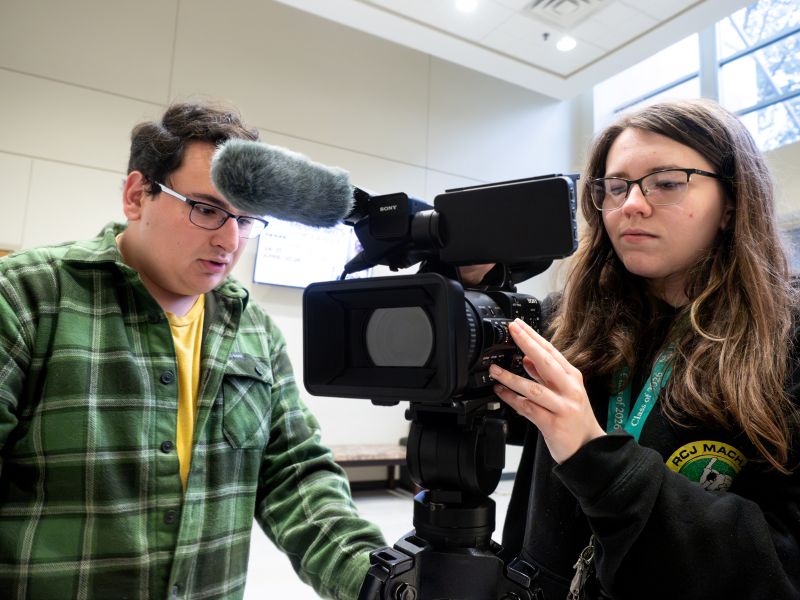
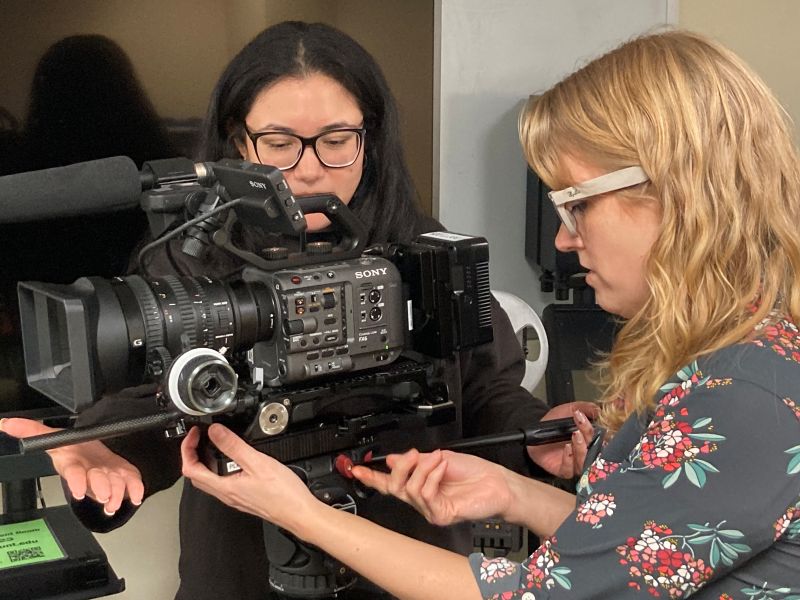
UNT worked with Texas Film Gear to upgrade its aging camera technology and match each camera to the right course level. Through that collaboration, the university selected the NX800 4K model for its introductory film production courses. The camera pairs a 20x optical zoom lens, a variable neutral-density filter, AI-powered subject recognition and high-precision autofocus. The FX6 Full Frame Cinema Line camera handles intermediate and graduate-level courses.
Courtesy / Sony
Why Did UNT Choose Sony Cameras? UNT chose Sony because the brand’s cameras align with professional standards and prepare students for entry-level production roles.
Brandon Gaesser, assistant professor at the UNT Department of Media Arts and interim chair for the department’s production committee, wanted equipment that reflected the tools students would encounter in the field. He also wanted cameras that were ready to use out of the box, without extra accessories or added investment.
“We chose Sony because we felt that would best prepare and position the students for entry-level roles as camera operators, and cinematographers at production companies,” Gaesser says. “Sony has a robust camera lineup that is widely used by working professionals and having familiarity with the menu structures and button layouts helps students seamlessly transition into those positions.”
Courtesy / Sony
How Easy Are the Cameras to Learn and Teach?
The cameras are straightforward to teach, and students pick them up quickly. Gaesser learned the trade on Sony’s PXW-FS5 and PXW-FS7 cameras and owns Sony models himself, so he speaks from direct experience with the learning curve.
“These are cameras that are very user-friendly and easy to teach the students,” Gaesser says. “The students can pick them up and learn them quickly, building muscle memory that extends across the Sony lineup.”
How Does the Consistent Sony Ecosystem Help Students?
A consistent ecosystem lets students move between cameras without starting over each time. UNT’s MFA students, who are standardized on the FX6, have taught undergraduates in the school’s Introduction to Media Arts Production course how to operate the NX800. That shared foundation gives both levels of learners the fundamentals to navigate other cameras in Sony’s lineup.
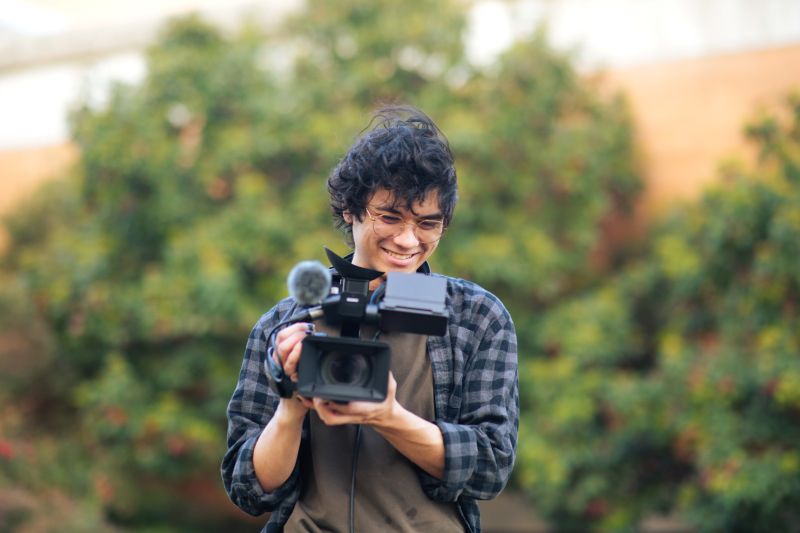
“Because Sony has made consistency a priority in its camera lineup, our graduate students, who are trained on the FX6, said it’s been incredibly easy teaching the NX800 because it’s basically a miniature FX6 with a built-in lens; the menus and button layouts are the same,” Gaesser says. “Going in reverse, learning the NX800 in the intro course is now making it significantly easier for undergraduates to learn the FX6 when they move up to our intermediate film course (Film Styles Production).”
Courtesy / Sony
How Does Image Quality Affect Student Work?
Image quality gives students the confidence to focus on craft rather than fighting their equipment. In the MFA program, capturing observational, verité style content means working through dynamically changing environments and lighting. The Sony cameras have handled those conditions well.
“The students need a versatile camera that can adapt with them,” Gaesser says. “The FX6 does just that. It can handle fast changing lighting situations, as well as low light, and offers high contrast, great dynamic range, an ergonomic form factor, and helpful autofocus.”
Strong dailies reinforce that confidence. “The feedback we get on the image quality is terrific, from the FX6s, in particular,” Gaesser says. “The students have been excited about the beautiful results when we look at their dailies and this helps to build their confidence. The powerful and trustworthy combination of capabilities helps our students focus on composition and framing, ultimately extending their creative storytelling.”
What Results Has UNT Seen?
UNT has seen a clear rise in the quality of student work and stronger preparation for the job market. The cameras have improved the educational experience, the curriculum and the caliber of finished projects. That progress supports students’ job prospects as they move toward professional careers.
“The students’ level of work has really increased substantially,” Gaesser says. “They love these cameras, and so do we.”
With Sony’s cameras in hand, UNT graduates leave the program trained and ready for professional production work as they look to shape the media landscape ahead.