
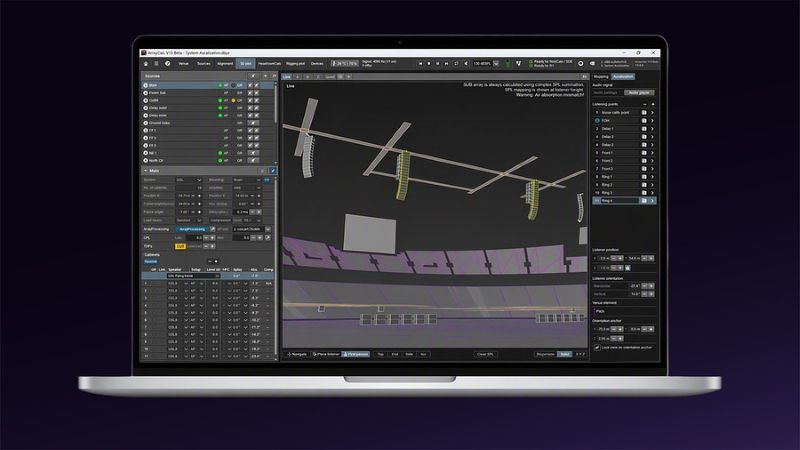
d&b audiotechnik has introduced System Auralization, a new ArrayCalc software feature that lets sound professionals listen to a loudspeaker system design before it’s deployed.
Key Things to Know
- System Auralization is a new feature in d&b ArrayCalc that lets users hear the direct sound of a system design before installation.
- The feature generates a real-time binaural rendering, so engineers can move through a virtual venue and listen from different audience positions.
- Users can hear the effect of changes to positioning, array geometry, amplifier settings, filters and ArrayProcessing configurations as they make them.
- New snapshot recall functionality lets engineers compare configurations without interrupting audio playback.
- A beta version is available now for download at dbaudio.com, with user feedback shaping the feature ahead of general release.
What Is System Auralization?
System Auralization is a new ArrayCalc feature that lets engineers hear the direct sound of a loudspeaker system design before it’s deployed. For decades, prediction software like d&b ArrayCalc has helped engineers visualize performance through plots, maps and acoustic data. This feature adds a listening dimension to that workflow, giving users a way to assess system behavior that’s often easier to judge by ear than by studying graphs. The result is a clearer read on aspects of performance that numbers alone can obscure.
How Does Binaural Rendering Work in ArrayCalc?
Binaural rendering works by generating a real-time audio model of the current system configuration that users can explore in first-person mode. Engineers move freely through a virtual venue, listening from different audience positions across the coverage area. That approach makes it possible to hear how design choices affect coverage, imaging and tonal balance throughout the audience. Instead of inferring the listening experience from a heat map, the engineer steps into the room and hears it.
What Can Users Hear and Adjust in Real Time?
Users can hear the impact of changes to loudspeaker positioning, array geometry, amplifier settings, filters and ArrayProcessing configurations. Engineers load their own audio material and listen to the simulated result of the design in real time, with any change to system parameters reflected right away. This lets them refine and validate decisions before arriving on site, cutting down on guesswork during setup.

“With System Auralization, engineers can build confidence in their decisions and address many important design considerations beforehand. It’s a huge time saver, which is especially valuable before a show,” says Florian Hahn, product manager applied software at d&b audiotechnik. “While built to support professionals, it also makes system behavior easier to explore and understand, offering a useful tool for the next generation of system engineers.”
How Does Snapshot Recall Work?
Snapshot recall lets users compare different system configurations without interrupting audio playback. Paired with System Auralization, the functionality captures a given setup so an engineer can switch between design options and hear the difference on the fly. That side-by-side comparison speeds up the process of settling on a final configuration, since the changes are audible rather than theoretical.
Who Benefits From the Feature?
System engineers at every experience level stand to benefit, from working professionals prepping for a show to newcomers learning how systems behave. For seasoned engineers, the feature trims time on site by resolving design questions in advance. For those earlier in their careers, it turns abstract acoustic data into something they can hear and understand, making it a practical learning tool as well as a production one.
How Can Users Access the Beta?
Users can download the beta version of ArrayCalc featuring System Auralization from dbaudio.com. Feedback gathered during the beta phase will help shape the feature ahead of its general release, so early adopters have a direct hand in how it develops. Engineers who want to test the workflow on upcoming projects can start with the download now.